Wednesday, 28 October 2015

Autumnal activities

Gosh, this has been a whirlwind of a first half-term. I have neglected my blog somewhat, but we have been up to some wildlife watching along the way!

Strumpshaw Fen - Sunday 11th October


This trip was significantly more autumnal than our last, but the common darters were still about in clusters, or rather in rows on any fence, bench or gate they could find. In their wake, they left destruction in the form of fragments of other small insects that had clearly been a feast for one or two of them.

It was quite quiet in terms of wildlife when walking the tracks of the reserve, but we stumbled across some drama when we reached Tower Hide. A huge mixed flock of wigeon, shoveler, teal and mallards, with a few lapwings keeping themselves to themselves, were spread across the lake. Wigeon began whistling and the whole raft of ducks and waders lifted as one, circled, then skimmed the water to return. At first, it was hard to see why, but they repeated this performance and we realised there was a marsh harrier gliding in close looking for a snack...


Queen Elizabeth Country Park, Hampshire - Friday 23rd October

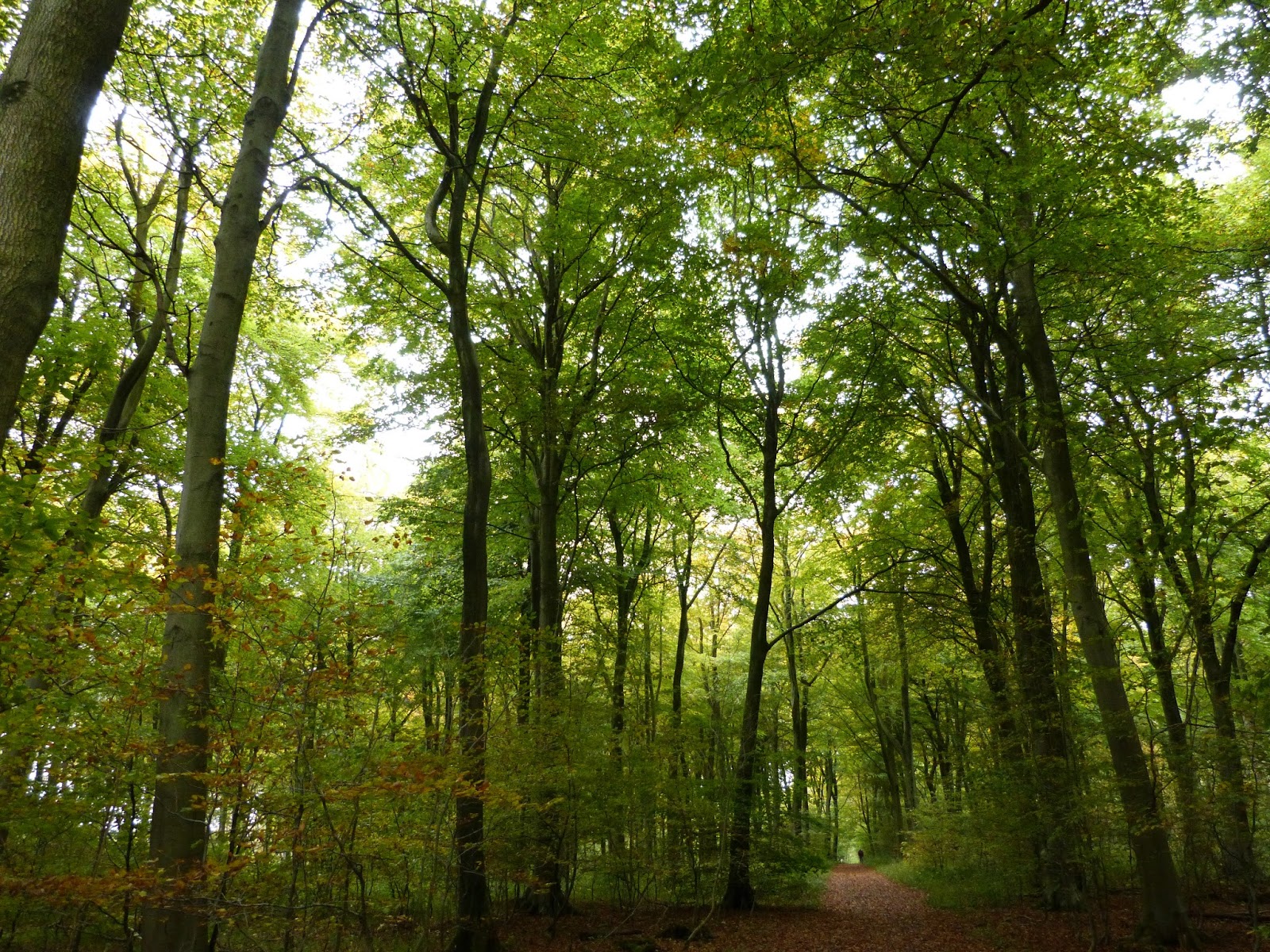
This park full of beautiful trees of many varieties felt very autumnal today. The trees were beginning to turn from green to shades of yellow-orange-red. Some appeared to glow in the half light made by the clouds and being deep beneath the upper canopy.


Southsea - Saturday 24th October

An early morning walk full of urban wildlife. I couldn't resist a photo of these starlings on their lighthouse roost, seemingly ignoring the flashing light silhouetting them at times.


Monday, 5 October 2015

Canoeing and fungi at Foxley

It's been a while since my last post; the start of the new school year has been a little on the hectic side! I am happy though - our wild flower meadow has worked, I just need to take some photos for a proper update on it soon. For now though, here are my wildlife outings we managed in September - two in one day!


An early start on a Sunday morning... at 6:00 am some friends and I decided to go on a 'River Bure Otter Spotting' trail with the Canoe Man. Unfortunately, the otters stayed well out of our way, but the river at this time of day was beautiful; an ethereal mist rose from the surface in the early morning sunlight and wraith-like herons merged with the mist until their movements betrayed them. An occasional kingfisher would dart in front of the boat, showing off its neon plumage, bright compared with the rising mist. Long tailed tits 'see see seed' to each other in the branches around us, giving a constant chorus to the still air.

Later the same day, to a completely different habitat, we took a trip to Foxley Woods. The ancient woodland that, in spring, is carpeted with fragrant swathes of bluebells, becomes a heaven for fungi in autumn. Fungi are my least competent kingdom when it comes to identification, but their shapes, textures and colours fascinate me, even if I won't ever master the tricks of identifying them.

Spectacular rustgill?
Paxillus?
Agaricus sp.?

Also below us, in the mud of the passed rains, were huge deer footprints - far too large to be roe, I think, they must be the work of a red deer. The stride length between prints was incredibly large. Above us, charms of gold finches flitted from tree to tree chattering their charming musical calls. Marsh tits, blue tits and great tits were also busy feeding from hidden insects in the tree canopy. A great spotted woodpecker betrayed itself by its loud genial call from the top of a pine tree.

In the sunnier spots of the wood were some late butterflies and dragonflies; common darter dragonflies and speckled wood butterflies alighting on living and dead leaves in bright shafts of sunlight.


Sunday, 6 September 2015

Last weekend of summer

So, we're back at school. Fortunately, last weekend, I made the most of the freedom and spent a lovely couple of days at Pensthorpe and Strumpshaw Fen with friends as well as walking around our local patch and admiring the hordes of birds that have been visiting our feeders.

For birds and other wildlife, our local patch was quiet. However, in the late summer sunlight, it was a beautiful sight across the River Wensum and the surrounding trees.

Surprisingly, our bird feeders have been a hive of activity throughout August; the complete opposite to what I would have expected. Flocks of 20 strong long tailed tits have been visiting alongside groups of greenfiches, chaffinches, blue tits, great tits, starlings, sparrows, coal tits... and a sparrowhawk!


The sun was shining and the waterfowl were out in force at Pensthorpe, as well as the small tortoiseshells and red admirals, dazzling with their fiery wings and occasionally sharing flower heads with horse flies. There were also swallows and house martins cutting through the air at speed and occasionally settling, but not for long. It was almost possible to feel their restlessness as they ready for migration.


The weirdest thing we spotted was at a river crossing. Just below the surface, sunning themselves on the silted river bottom were dozens of signal crayfish of all sizes. Alien and almost dastardly looking with their odd claws and segmented bodies.


The following day at Strumpshaw, the conditions were very different - blanket cloud smothered the sky despite it still being warm. It was a poor day for invertebrates (we didn't see a single butterfly), but a fantastic day for birds. We took the Meadow trail and my attention was immediately caught by a calling great spotted woodpecker foraging beneath the bark of a dead branch. I then very nearly trod on a common froglet, who kindly posed on a pile of dung.

We gradually made our way through the mud to Tower hide. We were greeted this time, not with a chorus of lapwings, but with a gaggle of greylag geese, knot, shoveler, teal and other ducks, a kingfisher, common terns, grey herons, little egrets and a great egret. The first confirmed sighting of a great egret in the UK for me. We sat and watched the little egrets display, with one (the male, we think) being somewhat keener...


Fen hide was next on our list, so we back tracked and took the turning. We were very glad we did. Here, the small jewel of kingfisher granted us good views as it flitted from reeds to post and back again multiple times. Marsh harriers kept their distance, but visibly quartered the reedbeds below. Chinese water deer chased each other through the clearings between reed beds, but the light grew too poor for photographs very quickly. Hopefully now autumn is (nearly) here, I might actually get a photo of these quirky looking animals...


Sunday, 23 August 2015

Blue butterflies and darting dragonflies at Strumpshaw

Last Sunday had good weather for cycling, so rather than driving to Strumpshaw Fen as we usually would, we decided to attempt the cycle out from Norwich. It took a while, but was a satisfying ride. Arriving slightly(!) more exhausted than usual, we were cheered by seeing a young blackbird sitting atop the 'Nature trails' sign outside the reception hide.


Aware of time and the fact that we would need to cycle home after our visit, we didn't complete a full circuit, but instead followed the Fen trail to Fen hide, Tower hide, then returned along the same route back to reception.

Stopping at the pond dipping station not far from the reception, common darters alighted regularly on the wooden fence. In the process of trying to photograph one, a fly took my camera's focus instead, resulting in the image below. Eventually, an opportunity presented itself to photograph an un-obscured common darter dragonfly. The other dragonflies we saw were too fast for me to photograph, but included brown hawkers, emperors and black-tailed skimmers.


The usual birds of the reserve were remarkably quiet, but the butterflies were out in force. On the short trail to Fen hide, a painted lady landed, sunning itself on the dry mud of the 'path'. Except for the individuals I have raised and released with my classes at school, I had not seen a painted lady in the UK before.


There were three stars of the show in Fen hide. From speaking to other visitors, we had just missed a kingfisher, but we had other avian species to occupy us. A young marsh harrier had claimed a spot in a small tree not far from the hide. After a few minutes of waiting and watching, a black swan gracefully swam into view, preening itself in the shallow water. A bittern also appeared a way back, lightly skimming over the reeds before descending and vanishing again.


We lingered by the buddleia where, on our last visit, we saw a swallowtail butterfly. No swallowtails today, despite hearing news of the second brood being on the wing, but plenty of other butterflies taking the limelight and looking glorious in the sunshine. The brimstones and red admirals looked particularly impressive today, with the sun back lighting their delicate forms.


Before we even reached Tower hide we could hear the lovely, incessant calling of a desert of lapwings. Entering the hide painted a more detailed scene; intermingled with the sea of purpley-green lapwings were orange-beaked ruffs, a single common tern, a royal looking cormorant on a throne of driftwood, bright white little egrets, statuesque grey herons and snow white mute swans. Above them all were dancing marsh harriers silhouetted against the bright sky. There was also a sleeping wader which has proved a bit of a mystery to identify. I think it may be a ruff, but opinion on iSpot is split, so I would appreciate any suggestions.


After watching the antics of lapwings chasing each other and the mallards that got in their way, we made our way back to the reception. On the way, we encountered a gentleman from Butterfly Conservation and some photographers who had discovered a common blue butterfly. They very kindly let me take a couple of pictures before continuing on our way. A good way to end the walk and start the long cycle home.


Monday, 17 August 2015

A week on the canals

This year, our holiday consisted of spending a week on a narrow boat on the canals around Wolverhampton and Birmingham. They might not have the best water quality in the world, but they can prove quite fruitful for wildlife that you may not usually see by foot. We began our journey at Kings Bromley Marina, starting on the Trent and Mersey Canal, turning onto the Staffordshire and Worcestershire, then finally the Shropshire Union, before turning around and heading back. We were lucky to have fantastic weather for all but the last day. Here are a few of our wildlife encounters whilst we were en route.

The first wildlife I noticed at the marina was the sheer number of housemartins and swallows swooping and diving , picking up water and flying insects. They were a constant presence throughout our canal journey, gathering on overhead cables, flying alongside us, crossing our paths, burbling and chattering to each other overhead. I completely agree with my Collins Bird Guide that their "song sounds rather sweet and 'eager'." I have never seen so many together or in such a short space of time.


Unlike the house martins, the kingfishers of the canals took a few days to discover. We saw two in our week on the boat, far fewer than a similar journey two years ago. They were equally charismatic and pleasing though. One delighted us with staying close to our boat for 10 minutes or more, waiting for us to draw level with it before taking a direct flight in front of the boat, diving in an attempt to fish and landing the other side again. It is very rare for us to get such a close up view of these electric blue birds, so having close encounters at roughly head height were a real treat.


Another treat, and very unexpected it was too, was a flock of lapwings passing overhead. We could hear their "bubbling, wheezy 'song'", peewitting to each other, showing off their apparently disproportionately long black and white wings.


Grey herons tend to be the comedians of the canals. They wait on the bank until the front of the boat begins to close on them, then they will side step and shuffle before taking off in a lazy, but agitated, flight to land only meters ahead. As the boat begins to close on them again, they look more and more irritated the greater the number of times they must repeat this performance. Eventually, they realise this can be solved by flying around and behind the boat, or by disappearing for a time into a nearby field. The canals also seem to be the only place that I ever see herons sitting in trees, surveying the surrounding habitat with their piercing yellow eyes.


Mallards, moorhens and coots are often seen either skulking in the reeds or begging for food at the boat windows. We occasionally had a following of mallards and swans, despite not feeding them, for five minutes or more. Many of them had young, who would call heartbreakingly if they were separated from their parents by the boat. They were always soon reunited, but watching their agitation is always unpleasant. On one occasion, we saw a Muscovy duck on the bank in addition to our usual crew of mallards.


When moored, the chinking chorus of blackbirds and wrens could often be heard. Robins would also sing at strange hours, sometimes bursting into full song at 9:00 pm, despite the darkness.

We saw few dragonflies and butterflies. The bankside vegetation was often choked with Himalayan balsam, but there were the occasional stretches of native wildflowers. My favourites of which were the fragrant meadowsweet and majestic fox gloves.


Wednesday, 5 August 2015

A literary account of the birds, dragonflies and butterflies of Strumpshaw Fen

It was our first anniversary on Sunday, so we began the celebrations with a walk around our favourite nature reserve: RSPB Strumpshaw Fen. I had an aim for today too - I wanted to see a Norfolk Hawker dragonfly. A little late in the season, but there were still a few reports of them and we thought we'd try our luck. The reserve held a few surprises for us, so I'm going to split this post into three sections: Birds, Dragonflies and Butterflies. I've also been reading the fantastically written book Landmarks by Robert Macfarlane, so I will attempt to correctly use some of the new words I have learnt to describe the habitats and locations of our sightings.

Birds

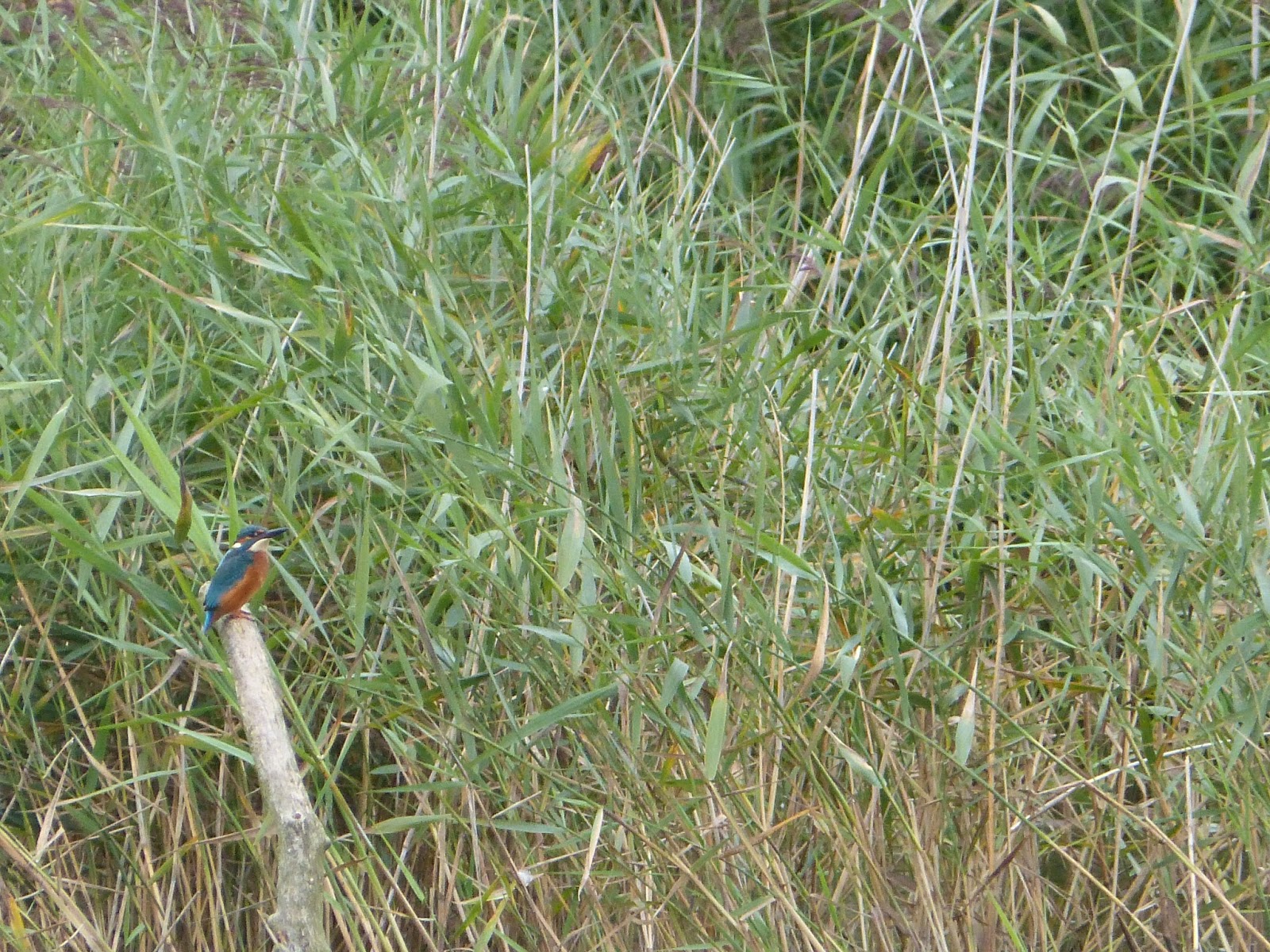
Part of the broads, the loch* at the visitor's centre can sometimes prove unfruitful for visible wildlife. Today was exceptional. The upright wall of reeds and rushes boasted a decorative electric blue gem; a kingfisher perched among them like a sapphire burning brightly, making the surrounding vegetation seem dull and uninviting. The cranks* of a tree beyond the loch held a camouflaged shape, betrayed only by its harsh swift-like silhouette; an adult hobby resting, possibly post-Odonata-hunt from the many pickings around the reserve. 

Taking the Meadow trail, in the hope of spotting dragonflies, we were passed by two gargantuan pairs of wings following the River Yare. Large white wing bars and fringed with black, I could not find their likeness in my Collins Bird Guide (I checked geese and cranes), so they had to remain our mystery birds of the day. The more recognisable shape of a hunting kestrel was a welcome distraction above the reed bed, with wings spread and tail spanned it hovered, surveying its target. Taking the trail to Tower hide, a great crested grebe made its presence known on the large lake preceding the hide. We paused for a snack, then continued on our doddle* to and up the steps of Tower hide. The vast expanse of the broads greeted our eyes with emerald greens and sapphire blues of the reed bed and water. Imperfections in the sapphire surface, other than the small ripples which could have been caused by a cat's paw upon the water, proved to be little egrets and a juvenile grey heron which looked strange to my untrained eye. I am not yet used to identifying juvenile or eclipsing plumage. The graceful white curves of the necks of the mute swans stood out in stark contrast to the dark, sharpened edges of the heron. A common tern brought attention to itself by standing behind tall, upright blooms of mauve and calling in its slightly aggravated tones, seemingly warding off other winged creatures from his spot. In the distance, sitting low and nestled within a small tree smothered in bindweed was a juvenile marsh harrier. Its dark plumage and blonde head shouting to be noticed in front of the backdrop of bleached green.


Dragonflies

 By speaking with the RSPB volunteers at the Reception, we discovered that there were still reports of Norfolk hawkers on the reserve, although they were coming to an end, and our best bet would be to try a peddel* along the Meadow trail. Many species of Odonata patrol territories, so if we paused when we thought we had glimpsed one, it would return. At every single plash*, lochan*, lidden* and hassock* we were instantly surrounding by dainty common blue and emerald damselflies. The latter of which really does appear to have an emerald stone on the thorax above the wings. Amidst the fluttering damsels rose a green clear winged dragonfly to settle on the opposite bank of the wide stream. In my mind it had to be a Norfolk hawker, but has since turned out to be a teneral (newly emerged) darter species. Surrounding us, buzzing us and disappearing from view always, as soon as we reached the path along the Yare, were large and colourful brown hawkers, flying fast and direct as military jets to do battle, to hunt or simply to vanish. As we neared Tower hide, other species of dragonfly became apparent, with the occasional passing emperor or the passing and gentle vertical resting of Southern hawkers among the leaves and twigs at the head height of a tall human (of which I am well below). The showy bright blue and green of the protruding eyes and body segments of the males standing out from the foliage and blurring together when in flight.


Butterflies

 In the glorious sunshine and among the many many Buddleia, Strumpshaw was abounding in fluttering and graceful Rhopalocera. The most numerous was the stunning peacock, alighting on almost any flowering plant in bloom we walked past. Meadow brown and gatekeeper butterflies were also abundant, flying low and indecisively over and between knee-height cover at the sides of the trails. Dark red admirals and bright white (small and large) fluttered and almost landed upon us as they flapped by to higher feeding positions. Brimstones, with their lurid yellow-green, seeming less neon in colour than they would on a duller day. The star of the butterfly show, however, one that I had not dared hope to see, and only did due to the kindness of other visitors pointing it out, was a Swallowtail. Very high on an impossibly tall Buddleia tree, not far from Tower hide, perched the large winged yellow-black-blue-red form, with its protruding hind wings far beyond the base of its abdomen. But, as quickly as it had appeared, it was gone again, leaving us doubting whether we had actually been in its spirit-like presence at all.

Glossary:

  • Crank = dead branch of a tree (Cotswolds)
  • Doddle = to walk slowly and pleasurably (Northern Island)
  • Hassock = large pond (Kent)
  • Lidden = pond (west Cornwall)
  • Loch = lake (Gaelic)
  • Lochan = small lake (Gaelic)
  • Peddel = to walk in a hesitating manner (Shetland)
  • Plash = small pool (Cotswolds)