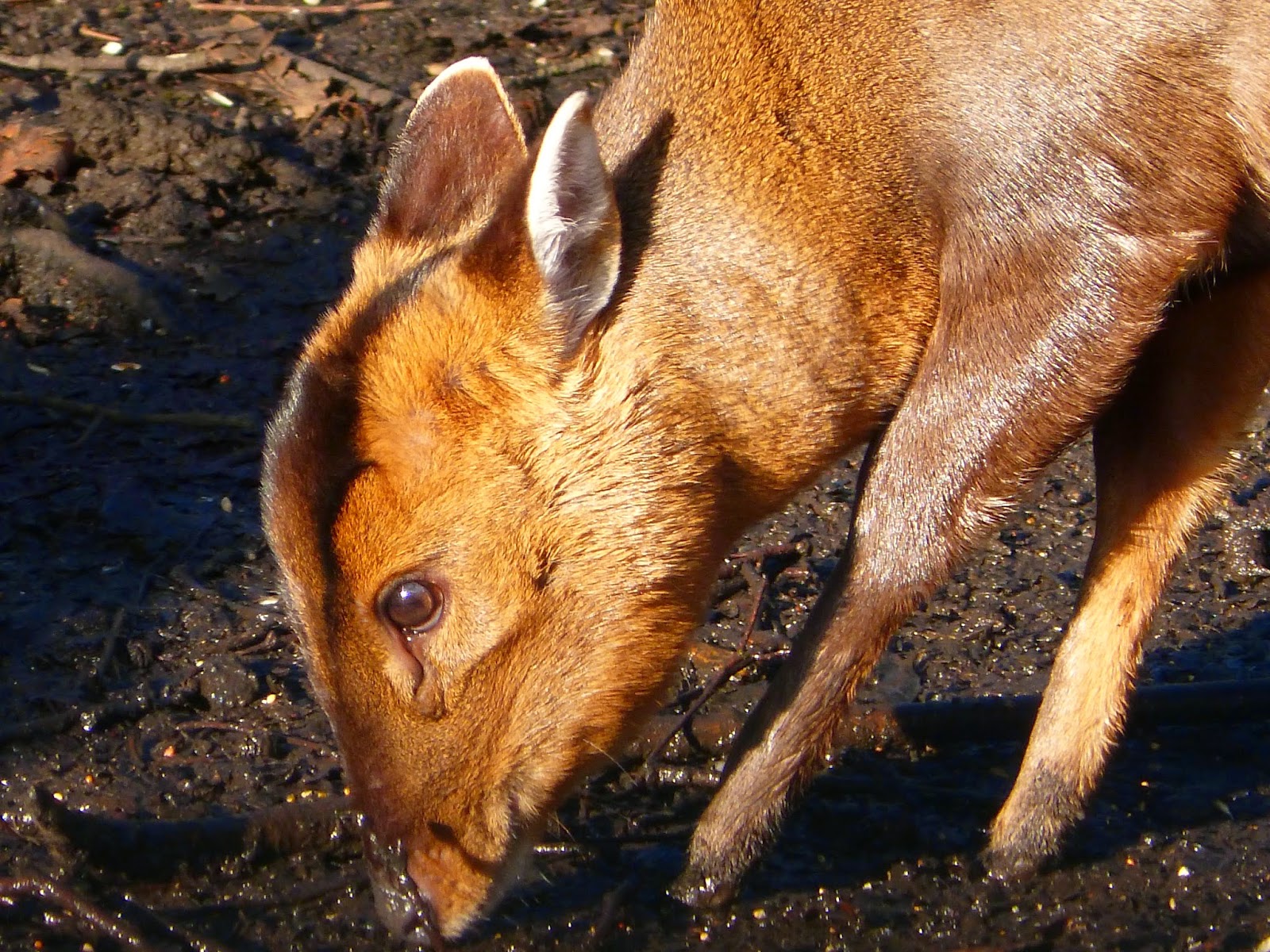
Delving into the woodland, we were met by the evening songs of birds; blue tit, great tit, finches and others, alongside the disappearing white rump of a roe deer. The woodland hide had some unusual invaders amongst its usual visitors of tits and finches. Two male mandarin ducks waited below the bird feeders for seeds to drop. A muntjac deer joined the fray briefly before blending back into the surrounding trees. Leaving the hide, we were met by several roe deer hiding behind low branches, and a young deer, less shy than the others, eyeballing us from the safety of the trees. A buzzard mewed overhead.
Welcome to my adventures and explorations of my local patch. I hope you enjoy reading about my experiences of the wonders of wild Norfolk, and occasionally further afield. I would love to hear from you if you have been to similar places, can identify any of the things I see, or if you have any suggestions for where I could visit next. This blog has been featured in BBC Wildlife Magazine as part of their local patch reporters project.
Showing posts with label #Pensthorpe. Show all posts
Wednesday, 15 February 2017
4. Pensthorpe Natural Park
Sunday, 14 February 2016
Pochard at Pensthorpe
Sunday 7th February 2016
It was a cold and windy day, cloudy with some sunny spells. We might have been frozen, but the waterfowl didn't seem to mind too much. I have a soft spot for tufted ducks, I'm not sure if it is due to their attempt at a rebellious hair style, their lemon yellow eyes or their daintily sculpted beak, but I do like these little diving ducks. I'm always equally fascinated by the elaborate feet of the coot, the one pictured below tolerated my close proximity and just kept munching on grass as I photographed it. Somewhat less easy to capture was a decent shot of the small raft of pochard on 'Old Squaw Lake', all were hiding their heads under wings and hiding entirely under trees. A couple eventually ventured further onto the open water, showing their bright berry red eyes.
|
|
|
Our walk today was brisk, trying to keep warm in the chilly conditions. We made it to the woodland hide where there were woodland birds in abundance. I have written before about my hunt for a nuthatch as this is one of the few places where I get to see them well. Luckily, one did show itself to feed and perch on the trunks of surrounding trees. They can be domineering over the bird feeders, but they are beautiful birds with their dusky blue backs, apricot blushed breasts and black bandana around their eyes, making them look like bank robbers of the bird world.
Labels:
#birdfeeders,
#birds,
#ducks,
#lapwing,
#localpatchreporters,
#Norfolk,
#Pensthorpe,
#smew,
hides,
nuthatch,
peregrine.,
scrape,
shelduck,
Woodland
Location:
Pensthorpe, Fakenham, Norfolk NR21, UK
Sunday, 6 September 2015
Last weekend of summer
So, we're back at school. Fortunately, last weekend, I made the most of the freedom and spent a lovely couple of days at Pensthorpe and Strumpshaw Fen with friends as well as walking around our local patch and admiring the hordes of birds that have been visiting our feeders.
For birds and other wildlife, our local patch was quiet. However, in the late summer sunlight, it was a beautiful sight across the River Wensum and the surrounding trees.
Surprisingly, our bird feeders have been a hive of activity throughout August; the complete opposite to what I would have expected. Flocks of 20 strong long tailed tits have been visiting alongside groups of greenfiches, chaffinches, blue tits, great tits, starlings, sparrows, coal tits... and a sparrowhawk!
The sun was shining and the waterfowl were out in force at Pensthorpe, as well as the small tortoiseshells and red admirals, dazzling with their fiery wings and occasionally sharing flower heads with horse flies. There were also swallows and house martins cutting through the air at speed and occasionally settling, but not for long. It was almost possible to feel their restlessness as they ready for migration.
The weirdest thing we spotted was at a river crossing. Just below the surface, sunning themselves on the silted river bottom were dozens of signal crayfish of all sizes. Alien and almost dastardly looking with their odd claws and segmented bodies.
The following day at Strumpshaw, the conditions were very different - blanket cloud smothered the sky despite it still being warm. It was a poor day for invertebrates (we didn't see a single butterfly), but a fantastic day for birds. We took the Meadow trail and my attention was immediately caught by a calling great spotted woodpecker foraging beneath the bark of a dead branch. I then very nearly trod on a common froglet, who kindly posed on a pile of dung.
We gradually made our way through the mud to Tower hide. We were greeted this time, not with a chorus of lapwings, but with a gaggle of greylag geese, knot, shoveler, teal and other ducks, a kingfisher, common terns, grey herons, little egrets and a great egret. The first confirmed sighting of a great egret in the UK for me. We sat and watched the little egrets display, with one (the male, we think) being somewhat keener...
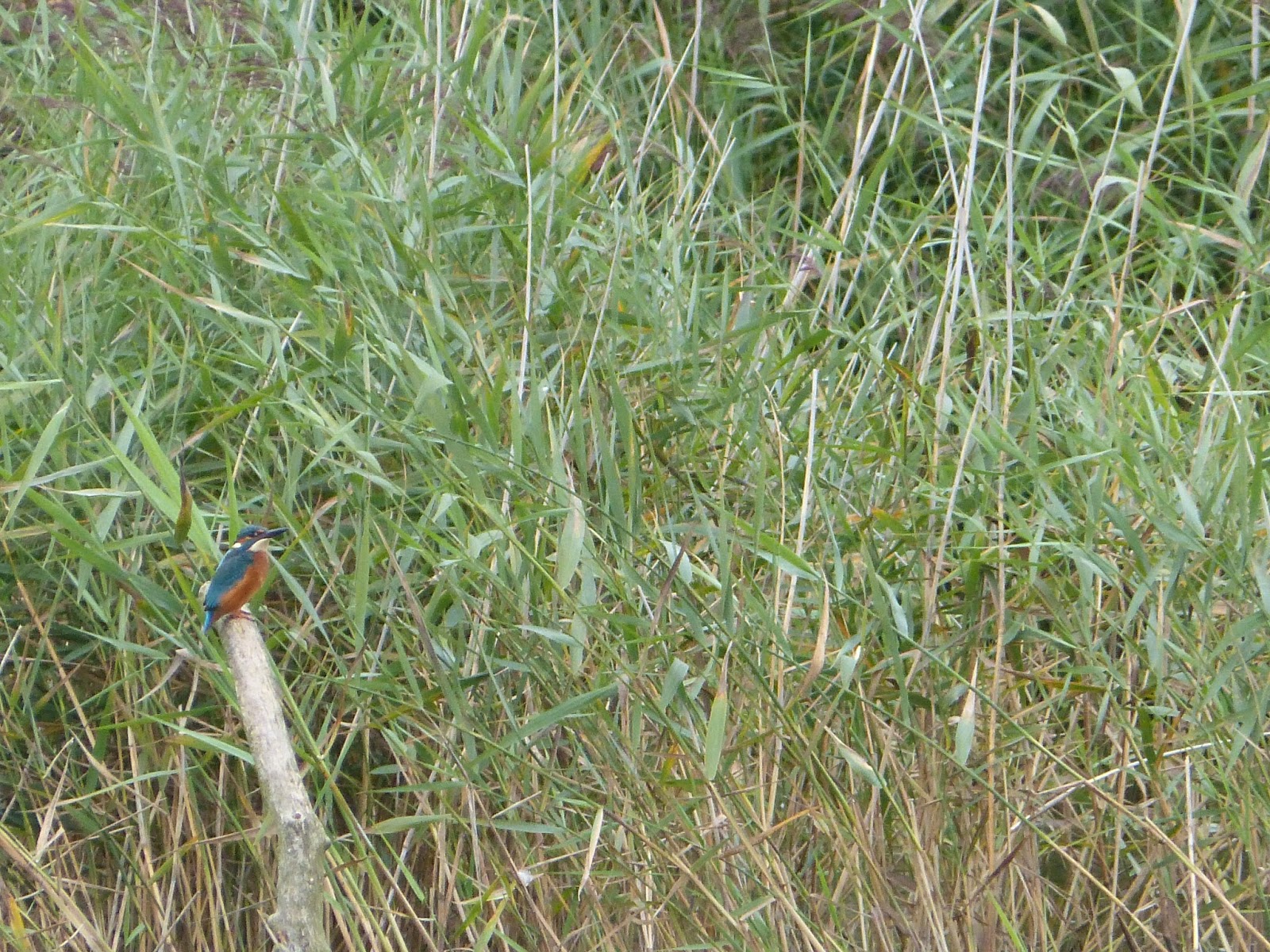
Fen hide was next on our list, so we back tracked and took the turning. We were very glad we did. Here, the small jewel of kingfisher granted us good views as it flitted from reeds to post and back again multiple times. Marsh harriers kept their distance, but visibly quartered the reedbeds below. Chinese water deer chased each other through the clearings between reed beds, but the light grew too poor for photographs very quickly. Hopefully now autumn is (nearly) here, I might actually get a photo of these quirky looking animals...
For birds and other wildlife, our local patch was quiet. However, in the late summer sunlight, it was a beautiful sight across the River Wensum and the surrounding trees.
Surprisingly, our bird feeders have been a hive of activity throughout August; the complete opposite to what I would have expected. Flocks of 20 strong long tailed tits have been visiting alongside groups of greenfiches, chaffinches, blue tits, great tits, starlings, sparrows, coal tits... and a sparrowhawk!
The sun was shining and the waterfowl were out in force at Pensthorpe, as well as the small tortoiseshells and red admirals, dazzling with their fiery wings and occasionally sharing flower heads with horse flies. There were also swallows and house martins cutting through the air at speed and occasionally settling, but not for long. It was almost possible to feel their restlessness as they ready for migration.
The weirdest thing we spotted was at a river crossing. Just below the surface, sunning themselves on the silted river bottom were dozens of signal crayfish of all sizes. Alien and almost dastardly looking with their odd claws and segmented bodies.
We gradually made our way through the mud to Tower hide. We were greeted this time, not with a chorus of lapwings, but with a gaggle of greylag geese, knot, shoveler, teal and other ducks, a kingfisher, common terns, grey herons, little egrets and a great egret. The first confirmed sighting of a great egret in the UK for me. We sat and watched the little egrets display, with one (the male, we think) being somewhat keener...
Fen hide was next on our list, so we back tracked and took the turning. We were very glad we did. Here, the small jewel of kingfisher granted us good views as it flitted from reeds to post and back again multiple times. Marsh harriers kept their distance, but visibly quartered the reedbeds below. Chinese water deer chased each other through the clearings between reed beds, but the light grew too poor for photographs very quickly. Hopefully now autumn is (nearly) here, I might actually get a photo of these quirky looking animals...
Labels:
#birdfeeders,
#birds,
#butterflies,
#kingfishers,
#localpatchreporters,
#Pensthorpe,
#RSPBStrumphawFen,
#wildlife,
great egret
Location:
Norfolk, UK
Thursday, 28 May 2015
Pensthorpe and Baby Birds
What better way to start off half term than with a trip to Pensthorpe? Eighteen wild bird species spotted, my first brimstone butterfly of the year and a multitude of just-hatched and young birds.
Before we even got through the gates of the reserve, we encountered a couple of mallard ducklings, frantically calling and wandering from water to land and back looking for their mother, only the second brood of ducklings I've seen so far this year. As we arrived quite late, we then went straight to the cafe, where, in a corner, there were communal nest boxes for sparrows, of which there were plenty and they were confident too, attempting to steal pieces of my scone from right under my nose!
We started off with a visit to the turtle dove breeding aviary. We both agreed that we could listen to the purring of these tortoiseshell and increasingly rare beauties. The bearded reedlings were also on good form, snuggling together amongst the reeds. There were also young corncrake and very tiny avocet hatchlings.
On entering the reserve proper, we, as we always do, fed their captive collection of wildfowl, then entered wilder territory. But, by their white-naped crane enclosure (who are still incubating a single egg, if you read my blog in April), there were a family of coots, including five youngsters, not long hatched from their size and comparative fuzziness! All were imitating the adult coots by preening and washing in the shallow water.
In the glorious sunshine, we walked under the archway of wisteria, emerging by one of the many lakes on the reserve. Suddenly, we heard a mechanical churring and singing from a waterside tree; a warbler which I could not differentiate by sound alone (I am still learning these magnificent songsters, but am struggling to tell them apart by both song and sight). I craned around different bushes, scanning them with both binoculars and camera to try to spot the bird. Eventually, I came across a reed bunting, but he was not the source of the melody. We had to continue on, but by chance, I stumbled across two of my marks, they turned out to be two reed warblers very low in the reeds by the pathway.
We continued on to head into the woodland and the bird hides, but before we could, we had to walk through gaggles of Canada, barnacle and greylag geese, five of which were greylag goslings. All were relaxing, sprawled out in the shade, apart from mother goose, who stayed very alert, keeping a wary eye on us as we passed. I knelt to photograph them and one gosling stood up and wandered towards us. Watching it walk and peck at the ground as it waddled along, with its tiny wings and oversized feet, really made me realise their similarity to their prehistoric ancestors, reaching back to archeopteryx and beyond.
There was little to be seen from the woodland bird hide, but a stock dove, a great spotted woodpecker and a grey squirrel graced us with their presence. After a five minute stint in the hide, we continued on rather briskly, realising that we didn't have long before we needed to depart the reserve and head home. But, on our return walk, we were rewarded with great views of a great crested grebe preening and apparently 'dancing' next to the wave garden. A fantastic end to our visit!
Before we even got through the gates of the reserve, we encountered a couple of mallard ducklings, frantically calling and wandering from water to land and back looking for their mother, only the second brood of ducklings I've seen so far this year. As we arrived quite late, we then went straight to the cafe, where, in a corner, there were communal nest boxes for sparrows, of which there were plenty and they were confident too, attempting to steal pieces of my scone from right under my nose!
We started off with a visit to the turtle dove breeding aviary. We both agreed that we could listen to the purring of these tortoiseshell and increasingly rare beauties. The bearded reedlings were also on good form, snuggling together amongst the reeds. There were also young corncrake and very tiny avocet hatchlings.
On entering the reserve proper, we, as we always do, fed their captive collection of wildfowl, then entered wilder territory. But, by their white-naped crane enclosure (who are still incubating a single egg, if you read my blog in April), there were a family of coots, including five youngsters, not long hatched from their size and comparative fuzziness! All were imitating the adult coots by preening and washing in the shallow water.
In the glorious sunshine, we walked under the archway of wisteria, emerging by one of the many lakes on the reserve. Suddenly, we heard a mechanical churring and singing from a waterside tree; a warbler which I could not differentiate by sound alone (I am still learning these magnificent songsters, but am struggling to tell them apart by both song and sight). I craned around different bushes, scanning them with both binoculars and camera to try to spot the bird. Eventually, I came across a reed bunting, but he was not the source of the melody. We had to continue on, but by chance, I stumbled across two of my marks, they turned out to be two reed warblers very low in the reeds by the pathway.
We continued on to head into the woodland and the bird hides, but before we could, we had to walk through gaggles of Canada, barnacle and greylag geese, five of which were greylag goslings. All were relaxing, sprawled out in the shade, apart from mother goose, who stayed very alert, keeping a wary eye on us as we passed. I knelt to photograph them and one gosling stood up and wandered towards us. Watching it walk and peck at the ground as it waddled along, with its tiny wings and oversized feet, really made me realise their similarity to their prehistoric ancestors, reaching back to archeopteryx and beyond.
There was little to be seen from the woodland bird hide, but a stock dove, a great spotted woodpecker and a grey squirrel graced us with their presence. After a five minute stint in the hide, we continued on rather briskly, realising that we didn't have long before we needed to depart the reserve and head home. But, on our return walk, we were rewarded with great views of a great crested grebe preening and apparently 'dancing' next to the wave garden. A fantastic end to our visit!
Labels:
#baby,
#birds,
#chicks,
#ducklings,
#goslings,
#Norfolk,
#Norwich,
#Pensthorpe
Location:
Pensthorpe, Fakenham, Norfolk NR21, UK
Monday, 6 April 2015
The First Chiffchaff
It's Easter and it appears spring is all around. On a visit to Pensthorpe with a dear friend a few days ago, from the moment we entered the woodland to the time we left the reserve we could hear the same familiar call of spring and summer: "chiff-chaff... chiff-chiff-chiff-chiff-chaff". This was my first of the year and, for me, it is one of the harbingers of spring.
We had fun, as per usual, feeding their captive collection of wildfowl, but the real treats were when we reached the 'wild' end of the reserve and watched from hides and walked through woodland. A small muntjac trotted past us, seemingly oblivious to our presence. Oystercatchers also seemed to feel the vibe of spring, as what appeared to be one sneaking up on another, turned out to be a more amorous encounter...
Across the several lakes and from the hides at the scrape, we spotted numerous other waterfowl; tufted ducks in good numbers, avocets preening and dabbling, shelduck sporting their shocking red bills and lapwing beginning to perform their tumbling display flights with their beautiful bubbling call. Pretty little barnacle geese were also sunning themselves on the grass, and beneath the captive white naped cranes, we spotted two mottled brown eggs. Their is something joyous about witnessing these early stages of life being 'created', and seemed especially fitting for a trip preceding Easter weekend.
Another befitting Easter symbol was the tiny baby rabbit, which could easily have fitted on the palm of my hand, who could only be betrayed by his hiding place in the fork at the base of a tree by his two hind feet jutting out. Apart from that, in colour, it was perfectly camouflaged, so I hope it escaped the beady eyes of any passing predator. This bunny was just outside the woodland hide, where we were treated to flocks of chaffinches, listening to their spinking calls, greenfinches calling "zveeeeeee", the sweet drumming of a great spotted woodpecker who also momentarily flew into view, a treecreeper who came tantalisingly close to the viewing panel and many of the other usual woodland birds hoovering up seeds.
Walking through the woodland, we played a game of hide and seek with both chiffchaff and nuthatch, both of whom would fly into sight and disappear among the shadows of branches and twigs, making us doubt our own vision, until they would appear again, just a little further along and vanish almost as instantly. A small dynasty of goldcrest played the same game with us, softly calling in their high pitch tones, they would only betray themselves occasionally by zipping from one branch to another.

At the end of our visit, we decided to enter the aviary where turtle dove and bearded tits can be found. Never having seen either of these species in the wild, I find the purring of turtle doves strangely electrifying; so familiar, yet exotic compared to our other doves. Bearded tits I adore, and are one of the species that I long to see in the wilds of Norfolk. However, I couldn't resist an 'awww' shot of this couple snuggled together in front of the nesting reeds. I may make these my 2015 challenge to see in the wild.
We had fun, as per usual, feeding their captive collection of wildfowl, but the real treats were when we reached the 'wild' end of the reserve and watched from hides and walked through woodland. A small muntjac trotted past us, seemingly oblivious to our presence. Oystercatchers also seemed to feel the vibe of spring, as what appeared to be one sneaking up on another, turned out to be a more amorous encounter...
Walking through the woodland, we played a game of hide and seek with both chiffchaff and nuthatch, both of whom would fly into sight and disappear among the shadows of branches and twigs, making us doubt our own vision, until they would appear again, just a little further along and vanish almost as instantly. A small dynasty of goldcrest played the same game with us, softly calling in their high pitch tones, they would only betray themselves occasionally by zipping from one branch to another.
At the end of our visit, we decided to enter the aviary where turtle dove and bearded tits can be found. Never having seen either of these species in the wild, I find the purring of turtle doves strangely electrifying; so familiar, yet exotic compared to our other doves. Bearded tits I adore, and are one of the species that I long to see in the wilds of Norfolk. However, I couldn't resist an 'awww' shot of this couple snuggled together in front of the nesting reeds. I may make these my 2015 challenge to see in the wild.
Thursday, 19 February 2015
Pensthorpe and the elusive nuthatch
| Tufted duck |
For the second time this week, we've made it to one of my favourite places. I love half term holidays. As always, I made sure I bought food to feed their captive ducks and geese; it's always good to make friends and have a horde of hungry water birds following you around for a bit...
The wilder side of the park is my preferred area though. The first lake you pass is called 'Old squaw lake', as always, plentiful in its numbers of tufted ducks, and this time there were a few pochard to be seen, as well as a great crested grebe.
| Pochard |
| Male chaffinch |
| Nuthatch |
Full species list; 29 wild bird species spotted in all:
| The wader scrape |
- House sparrow
- Green finch
- Blue tit
- Great tit
- Coal tit
- Chaffinch
- Nuthatch
- Long tailed tit
- Wood pigeon
- Stock dove
- Pheasant
- Blackbird
- Robin
- Coot
- Moorhen
- Greylag geese
- Egyptian geese
- Mallard
- Lapwing
- Shoveler
- Tufted duck
- Pochard
- Teal
- Shelduck
- Oystercatcher
- Little egret
- Cormorant
- Black-headed gulls
- Great crested grebe
Tuesday, 20 January 2015
Pensthorpe again
After not visiting this reserve in over a year, I've made two trips in as many weeks! I took a friend to visit the reserve as she had never visited before, so we made the most of it. As I mentioned in my previous post, Pensthorpe has a mixture of captive animals and wild; we bought food to feed any that would come to us, and ended up with a following of ducks and geese of various shapes and sizes. This is always a perfect opportunity to photograph these birds, as long as they don't try to clamber over your feet, like a sweet little smew tried to do to me!
This all happens around 'Mill Pond', the closest body of water to the reserve entrance. Not including the captive birds, we saw a total of 24 different species, including one rather unexpected bird from a distance across this 'pond'. They keep Eurasian cranes as part of their conservation programme, but wild cranes have been reported here, and we saw one in the distance at the edge of the water. The close up images, however, I have to admit, are of their captive cranes.
Walking on from the conservation centre, the trail continues between two large lakes, where tufted ducks could be found in abundance. Eventually, this becomes a woodland trail where a small bird hide is nestled amongst the trees. There are a range of bird feeders here, and the scene looks like what I wish my eventual garden could look like; woodland birds everywhere, fluttering in from all directions. Blue tits, great tits, coal tits, chaffinches, robins, nuthatches... there was even an extremely confiding muntjac deer nibbling at the dropped seeds below the feeders, which stayed the entire time we were there, completely oblivious to, or comfortable with, our presence.
It was a cold and icy day, and the rest of the walk was spent marvelling at the beautiful scenery; frozen water and frost kissed reeds and rushes.
| Smew |
| Tufted duck |
| Wild Eurasian crane |
| Captive Eurasian crane |
| Muntjac deer |
| Coal tit |
Labels:
#birds,
#localpatchreporters,
#Norfolk,
#Pensthorpe,
#smew
Location:
Pensthorpe, Fakenham, Norfolk NR21, UK
Subscribe to:
Posts (Atom)