Showing posts with label #RSPBStrumphawFen. Show all posts

Saturday, 1 June 2019

Swallowtails at Strumpshaw


What a start to #30DaysWild! Strumpshaw Fen was literally buzzing with activity. I have never seen so many visitors here, there was no room left for parking, so we continued to Buckenham Marshes and walked back. This was a good choice, however, as I *think* we spotted a couple of Norfolk Hawkers along the lane – brown dragonfly with clear wings – but they were too fast to spot the diagnostic green eyes. Butterflies like commas and orange-tips also graced the hedgerows.

Arriving at the Strumpshaw Fen reception hide, their small ‘wildlife garden’ was surrounded by photographers all snapping away at a single Swallowtail butterfly who was clearly trying to give everyone a good view. I always forget how big these insects are, but being able to compare it to a brimstone and orange tip on the same patch really showed the size difference. Happily feeding on the white flowers of Honesty, these impressive creatures stand out with their bold patterning of yellow and black with the faint dusting of blue near their shocking red eye-spots.


We decided to take the woodland trail leading to the river, then back to the reception hide via Fen Hide. The woodland trail was a good choice for dragons and damsels; countless blue damselflies (a little quick to identify), some large red damselflies and female scarce chaser surrounding the stream. This is only the second time I’ve seen a scarce chaser and it was in exactly the same place as several years ago. The yellow-almost-orange body and wing patches with the bold black stripe leading up the abdomen and tapering to a point near the wings.


A kestrel hovered as we walked the river bank and a family of swans with young cygnets appeared at Fen Hide, alongside a confiding reed bunting who perched on reeds next to the hide.


Monday, 20 August 2018

A Dragonfly and Butterfly Safari at Strumpshaw Fen

It was a mild, cloudy and windy day; nothing like the scorching, calm weather we’ve gotten used to, so we weren’t overly optimistic about how many of our spectacular aerial display masters we would find on our dragonfly and butterfly safari at RSPB Strumpshaw Fen. Luckily, the cooler weather meant the smaller species were less quick on the wing so Andy from Butterfly Conservation Norfolk, who was leading the walk, was able to quickly net a common blue damselfly less than five minutes in to point out the identifying features. I’ve always loved dragonflies, but I’m still getting to grips with identification techniques, so this was extremely useful, especially for the tricky-to-tell-apart blues. The common has a dot on ‘S2’, the second abdominal segment, whereas an azure, which we didn’t find, has a U-shape. Our next find was a holly blue butterfly enjoying some bramble flowers, unfussed by the small group of interested naturalists keenly watching it crawl.

Common blue damselfly
Holly blue butterfly
This was shortly followed by a willow emerald damselfly, our next catch, even more beautiful up close, this damselfly is a relatively recent colonist here and has spread incredibly quickly.

Willow emerald damselfly
Ruddy darters kept themselves out of reach, perching on tall sticks or staying out over the water to prevent us sneaking up on them. Andy did manage to catch one later, however, to point out its characteristics. More keenly ‘waisted’ than a common darter; this was obvious when in the hand as an identifying feature of this species rather than just going by colour.

Ruddy darter
Southern hawkers I’ve always thought of as an impressive and curious dragonfly, but the female that was netted really impressed. Not at all happy with being caught, she valiantly tried to gnaw her way free, showing the movement in her jaw as she tried to pierce the skin. Up close, this is clearly a robust dragonfly with strong flight muscles and beautiful eyes.

Female Southern hawker
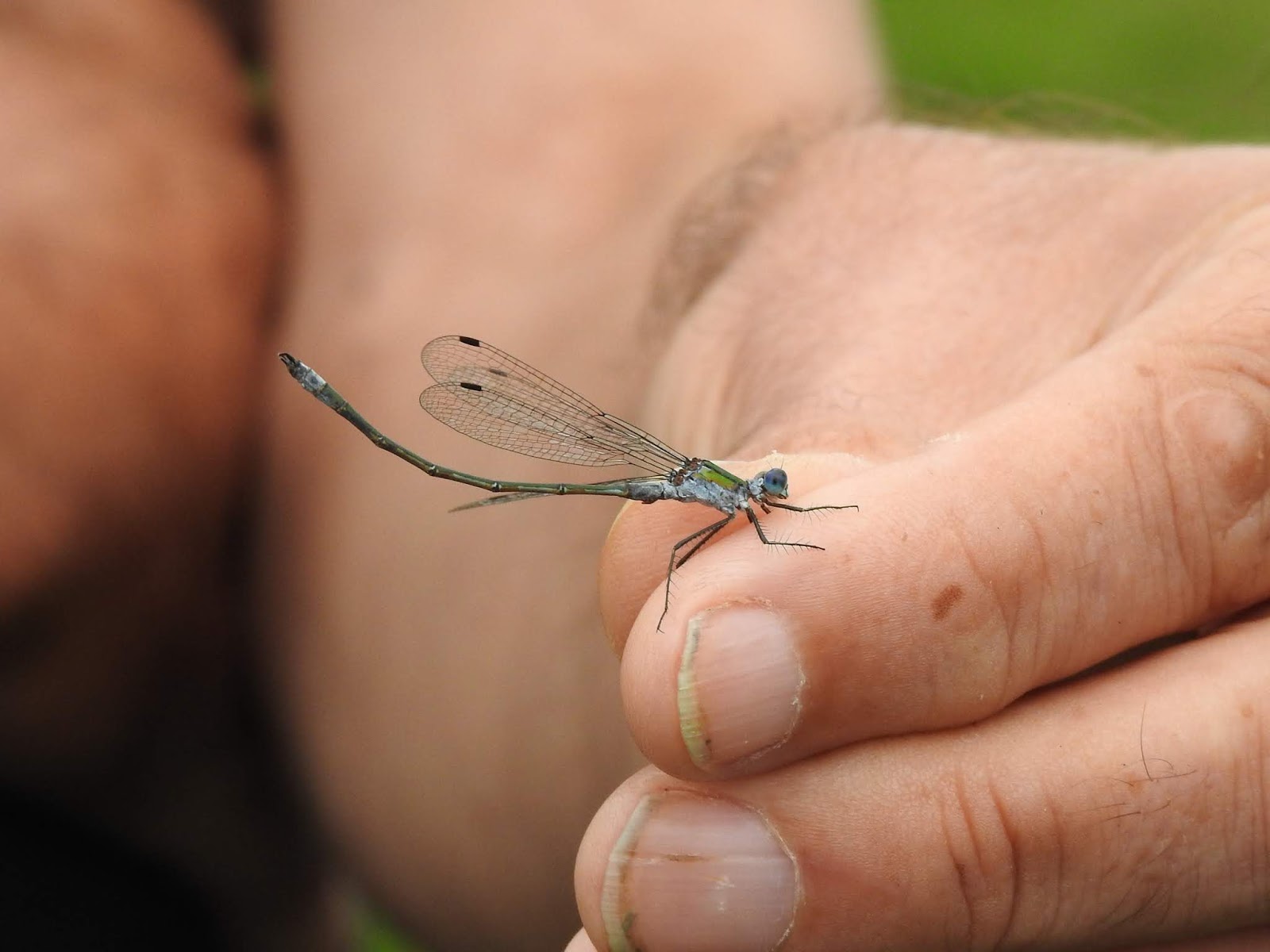
A pretty emerald damselfly was our next catch, really unimpressed with being caught, he curled his abdomen over his back in an attempt to tell us to leave him alone.

Emerald damselfly
Spotting a brown hawker that was far too high to even attempt to reach and several migrant hawkers running rings around us brought our dragonfly total to seven for the afternoon. However, the show wasn’t quite over yet. For a finale, Andy spotted a male southern hawker in the hedge and managed to catch it to show us the colour variation between male and female. This individual had beautiful green-blue eyes and an ‘expression’ that seemed to show how angry it was at being caught.

Male Southern hawker
For anyone interested in dragonflies, I would highly recommend this event – the next is in June 2019. 

Tuesday, 24 July 2018

A summer walk at Strumpshaw Fen


There were plenty of majestic dragons and fluttering damsels at a very muggy Strumpshaw Fen on Sunday. Newly emerged dragons lifted from the meadow trail as we walked, their fresh and filmy wings glistening in the harsh sunlight, mostly darters that were not yet developed enough (for me) to identify. Common and ruddy darters appeared and just as quickly disappeared, whilst brown hawkers patrolled, hunted and buzzed at us when we lingered too long. Common and blue tailed damselflies alighted on upright stems off the paths and waterways and a Southern hawker eventually obliged by settling on dead leaves, possibly trying to blend in. Black tailed skimmers always kept a step ahead of us on the paths near fen hide, settling again and lifting off as we approached, rarely realising we would just keep getting closer again.

Black-tailed skimmer
Southern hawker

Vivid butterflies were also out in force, some dark mysteries until opening their wings. Peacocks and red admirals littered the waterside brambles, contrasting with the green foliage. Small and other ‘whites’ were everywhere, like large petals of blossom alighting, then being blown by a spring breeze. The odd small tortoiseshell and speckled wood settled and showed off. Never before had I noticed how furry speckled woods are, usually they are moving too quickly through dappled woodland, chasing their competitors or potential mates.


Red admiral
Peacock
Small tortoiseshell
Speckled wood

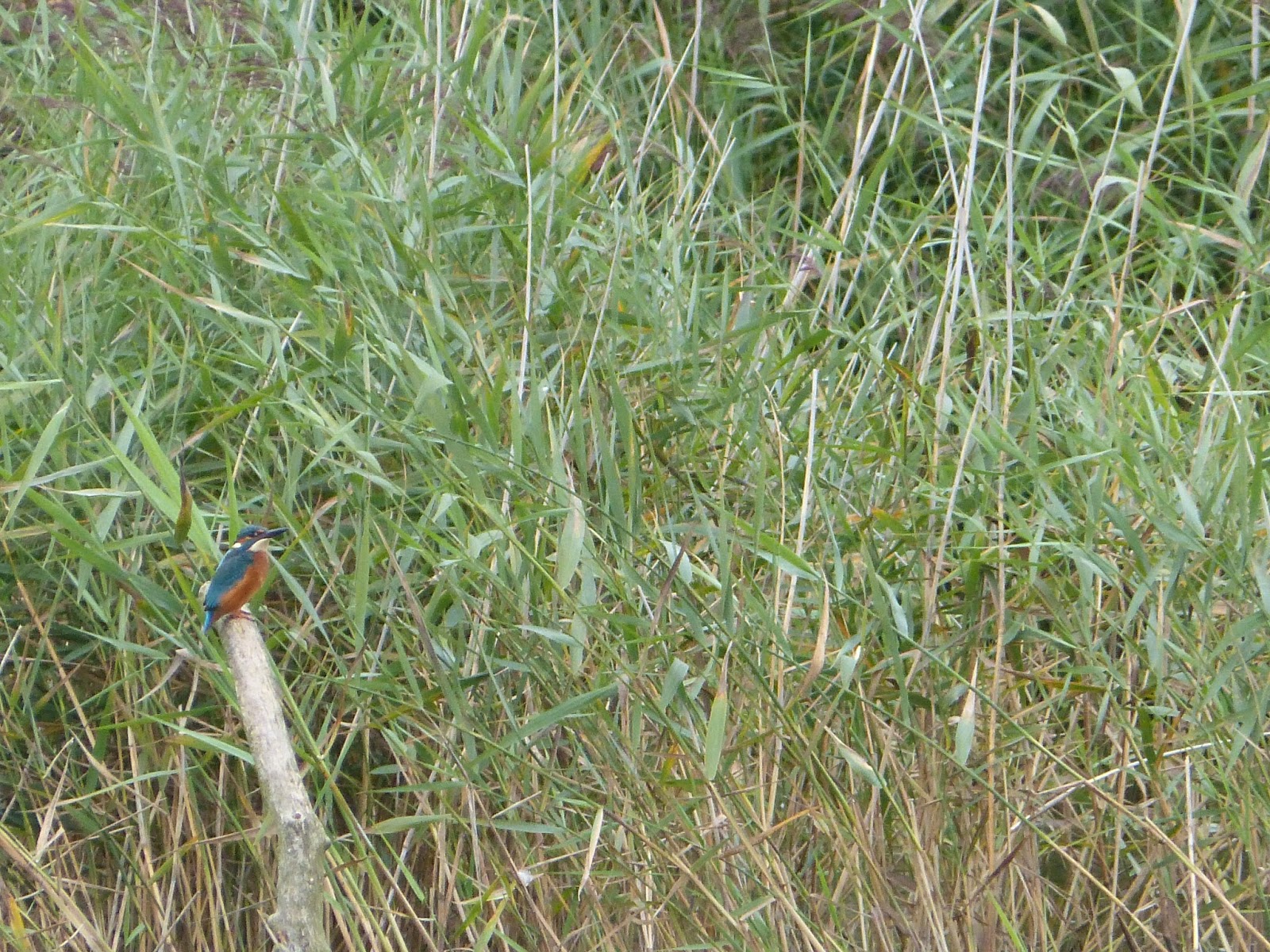
The birds were mostly quiet, with most now being in eclipse. An obliging kingfisher at Fen Hide decided to show off with a long bath and preening session as we watched, in little hurry. Here, a little egret also danced whilst trying to spear fish. Tower hide held a handful of ducks, young and begging black headed gulls and a couple of moulting ruff. There was no sign of the reported great white egrets from the previous day. However, the dragonflies and butterflies certainly made up for it – I’m now looking forward to their butterfly and dragonfly safari next month!

Monday, 13 March 2017

6. Strumpshaw Fen

A bright day with the hazy Sun peering through stratus cloud; blackthorn blossoms sweetened the air and heightened the senses, spring seems to have begun. Bees delicately visited the pink-white flowers and the song of small birds came from every tree.

We made a bee-line for tower hide, spotting greylag and Canada geese lining up along the banks of the lagoons on the way. Cetti’s warblers exploded in song, buried somewhere deep along the edges of the path. Tufted duck, pochard, mute swans and great crested grebes dabbled and drifted on the pools of water. Tower hide boasted mixed rafts of shoveler and teal, with the occasional shelduck and gadwall. A heron hunted in the distant pools. A majestic marsh harrier perched in a scrubby tree, surveying the view over the reedbed. Taking to the sky on broad, fingered wings, looking straight into the hide, or so it seemed, then skimming the roof and away.

Rather than risk the sticky mud that can frequent the trail at this time of year, we turned back and made our way towards fen hide. At first, little moved, except a dabbling coot. Then, thanks to some other visitors who pointed out the ‘ping’ call coming from the reeds, my first ever photograph of a wild bearded tit – a pair presented themselves to the onlookers from the hide, the male showing off his beautiful markings from the tip of a reed momentarily before flitting away and beckoning his mate to follow. 


Monday, 6 June 2016

#30DaysWild - Days 5 & 6 - Strumpshaw Swallowtail


RSPB Strumpshaw Fen was fabulous today. Last year, we spent a long time hunting for swallowtails and saw one from quite a distance. Today, there was one large, beautiful individual a stone's throw from the carpark and reception hide.


The swallowtail was close enough that I could really get a perspective of how large these butterflies actually are. Completely unphased by the number of photographers, some of whom were getting rather close to it, it stayed in the same spot for a long time. According to other visitors, it seemed to have a penchant for all things pink and red - including peoples' bags and shoe laces!

Whilst we were watching the elegant swallowtail, a shout of "otter!" went up from the reception hide. We all rushed over to be greeted with the sight of an otter bobbing its head in and out of the water. This is the first time I'd seen an otter in over a year. We were doing well - we'd been at Strumpshaw for all of 10 minutes and had already seen enough to keep us more than happy for the rest of the visit, but it didn't stop there.

Someone overheard us talking about Norfolk hawkers, another insect that we've spent a fair while looking for in the past. Every time I spot a brown hawker at Strumpshaw, I get my hopes up that I might spot those tell-tale green eyes, but never have. However, the kindly visitor who overheard us showed us to a spot where he'd seen them earlier in the day. Out of almost nowhere, a Norfolk Hawker appeared, hunting ever closer until it was nearly over our heads. It was in no mood for settling down for a photo, but very glad that we've finally seen one.

I had some doubts about our next 'big find' of the day, but I believe (thank you for your confirmations, people of twitter!) that the dragonfly below is a scarce chaser. According to my 'Britain's dragonflies' guide, this is a species which is near threatened on the red data list, but locally abundant in a few places in East Anglia.


After seeing two dragonflies which I can now 'tick' (if I had a list), we then spotted their arch nemesis, the agile and hunting hobby. We watched as it scythed through the sky, occasionally catching it's russet underside against the bright sky, over the place we'd been watching the Norfolk hawkers.

These are, of course, only a handful of the wonderful species we found at Strumpshaw, a full list can be found below:

Mammals:
Otter
Chinese water deer

Butterflies:
Swallowtail
Brimstone
Red admiral
Small white

Dragonflies:
Norfolk hawker
Brown hawker
Scarce chaser

Birds:
Marsh harrier
Hobby
Swift
Coot
Mute swan
lapwing
Mallard
Jackdaw
Reed bunting
Reed warbler
Cetti's warbler (heard)
Wren
Tree creeper
Black bird
Robin
Chiff chaff
Chaffinch
Wood pigeon

Being back at work today, I've settled for my 'random act of wildness' being the walk from my car to my class room. I felt truly lucky to work in such an idyllic setting this morning. All I could hear was bird song - the continuous and impressive song of the skylark travelling across the nearby fields, the attention grabbing song of the chaffinches in the trees and the beautiful, almost purring 'tzveeee' songs of the green finches. A wonderful start to the day.

Sunday, 28 February 2016

Strumpshaw stomps

We've had a couple of nice walks around Strumpshaw Fen recently, despite the muddiness and diversions! Without wellingtons, some of the reserve has been inaccessible to us of late, leaving us to wander the woodlands, which we don't always visit, and spending more time at Fen hide.

Our trip during half term did not prove fruitful in terms of waders, but it was wonderful to watch a pair of marsh harriers above the reeds at Fen hide. The woodland was very quiet for birdsong, but we were lucky to spot a tree creeper at the very end of the woodland walk. I have not seen one of these well camouflaged birds in a long time, but this individual was very obliging, returning to the very base of the tree trunk before circling its way round and up, allowing for some good observations. I noticed only afterwards that I could see its tongue in the photographs I took.

The snowdrops were out in force, lighting up the woodland walkways like fairy lights. Amongst the dead wood and decaying leaves were also the vivid hues of the scarlet elf cap fungus.


Our second visit today was much later in the afternoon, in the hope of seeing more crepuscular animals. On arrival, we were told that a penduline tit had been showing well from Fen hide and if we stayed until dusk, we might be lucky enough to spot it. It was not to be, however.

The woodland walk today was much livelier than it was on our last visit, with bird song louder and more varied. A pair of coal tits hovered and hid among the upper branches of the coniferous trees, not far from where our tree creeper had been. The most surprising observation in the woodland was a seven spot ladybird perched on a trio of hazel(?) catkins. It must have ventured out during a milder spell, now trying to find a crevice to squeeze into in the chilly afternoon.

We walked back through the woodland and made our way to Fen hide. Here, we saw two marsh harriers gliding above the reed bed, then disappearing among the swaying golden fronds. At the same time, appearing from near the waterline, were Chinese water deer. They would appear and disappear silently into the reeds, with no betrayal of their loud vocalisations that we could hear only later when leaving the hide.


Sunday, 20 December 2015

RSPB Strumpshaw Fen & Buckenham Marshes

An unseasonably warm day, but the perfect weather to go for a pleasant stroll around Strumpshaw Fen. We arrived at around 10 o' clock and were asked by the volunteers at the reception to report back what we had seen. All they'd had so far was a cormorant. Looking out onto the pool, there were a raft of mallard, gadwall and shoveler.

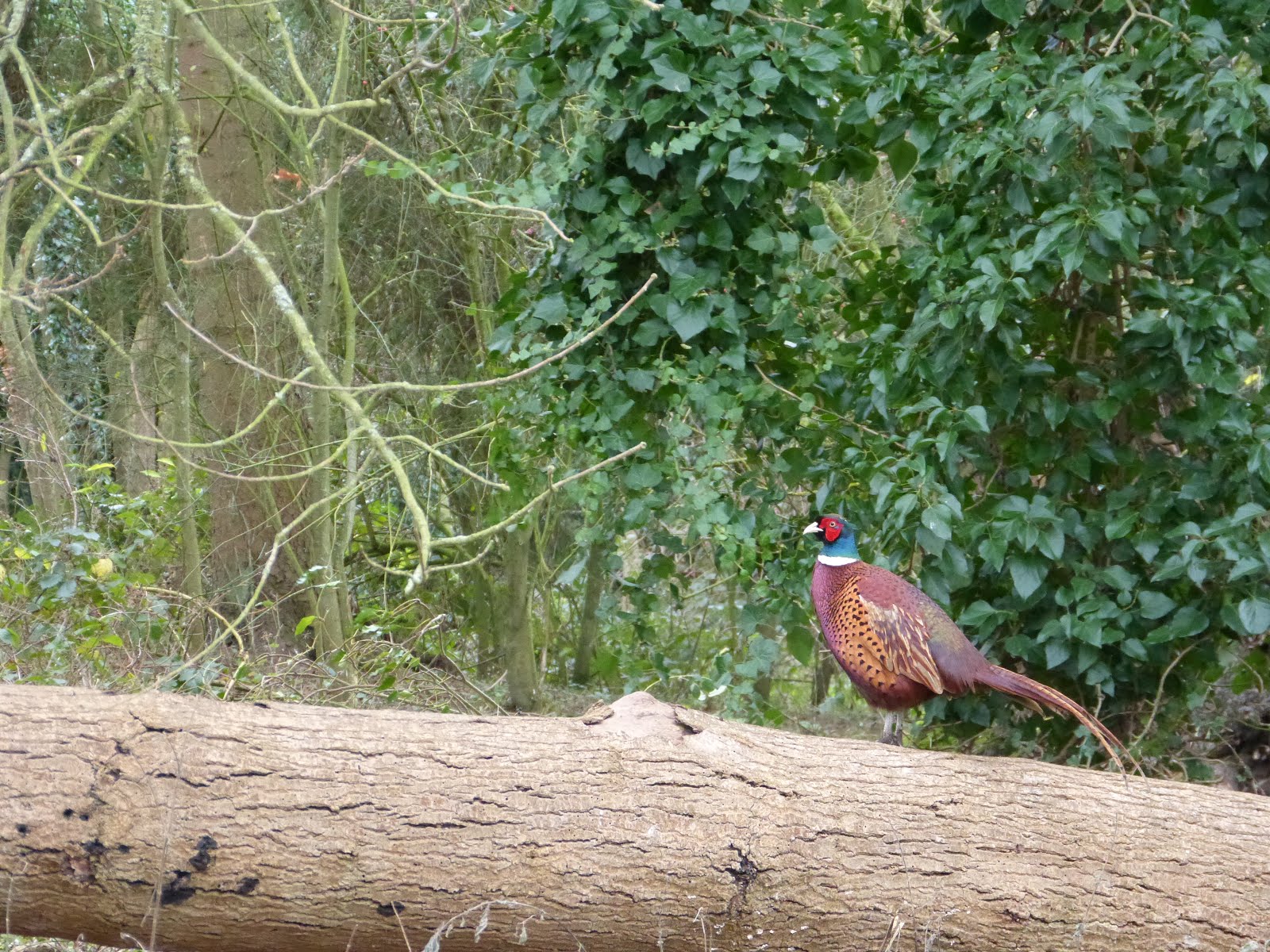
Before we got very far, we were greeted by a very handsome male pheasant which had alighted on a fallen tree trunk. Not the most 'exciting' sighting, but he was resplendent in his winter colours.

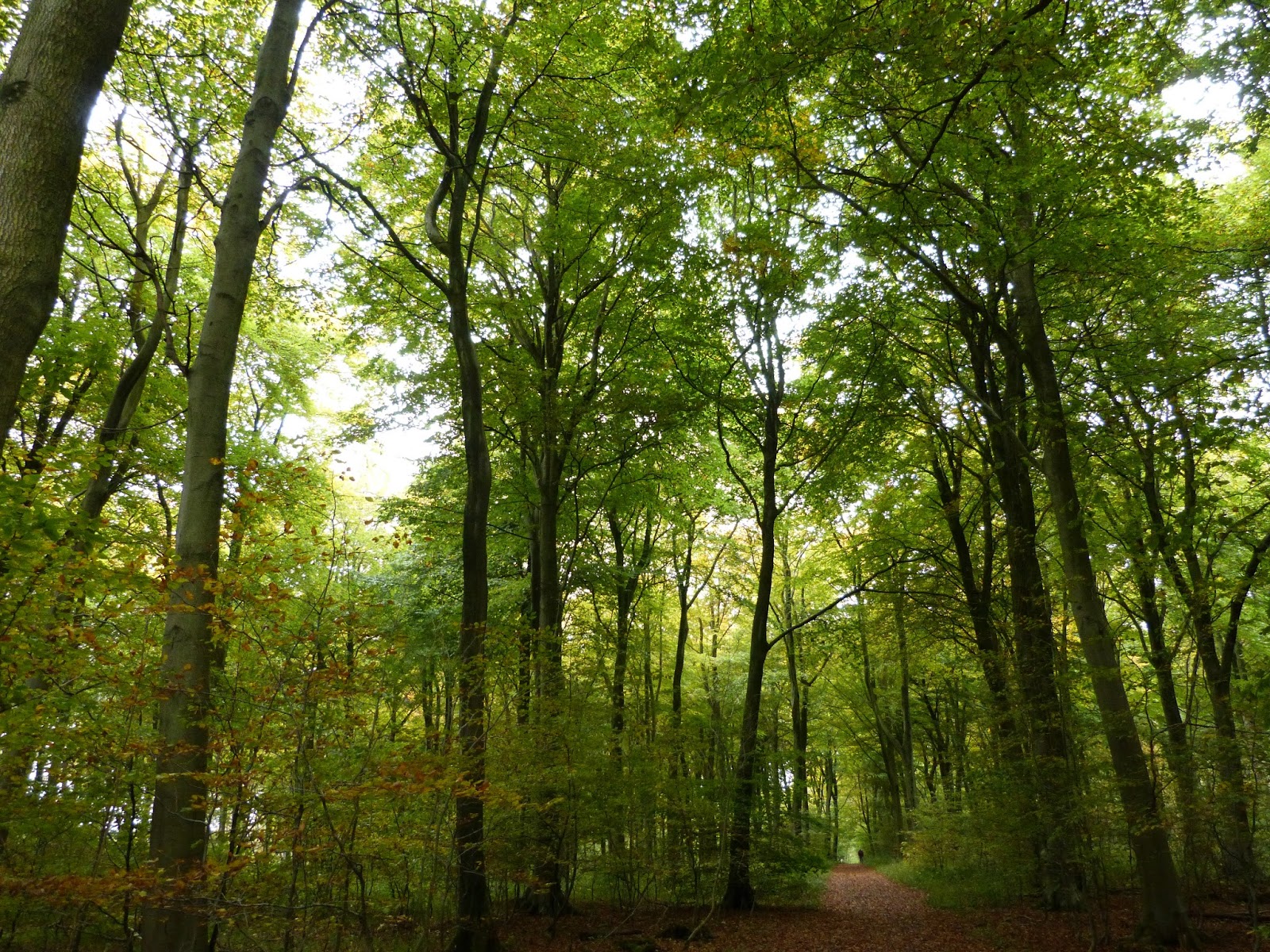
We began on the woodland trail and it wasn't long before a flock of softly calling finch-sized birds flew overhead and settled in a nearby tree. They set to work on tweezering seeds out of tightly closed cases. It was a mixed flock of siskin and goldfinches. I am slowly becoming more familiar with the siskin this season, getting used to looking for their unique stripy-ness and their high pitched calls when it flight and perched. Reaching the end of the woodland trail, following an unidentified bird of prey (we never did get a good look at it), we spotted a mistle thrush perched on telephone wires in the neighbouring field. It has been a long while since I've seen one of these handsome birds.


We turned onto the fen trail and began the muddy walk towards Tower hide. We heard a great spotted woodpecker calling in the distance, eventually tracking it down to the top of the tallest branches in the woodland. Walking across large clearings like this always makes me notice Norfolk's big skies, and always makes me question why I would ever live anywhere else.

A robin, dunnock and few blackbirds greeted us along the trail, but it was very quiet. Pausing at a clearing just before reaching the hide, I spotted what I am sure was a water vole swimming between patches of reed. All I could make out was little brown head above the water line, swimming completely silently and with almost no wake, I would have missed it had I not already been looking at something else in the same direction. Apart from this potentially exciting encounter, there was little action even looking out from Tower hide, with the exception of two majestic marsh harriers quartering the reed bed below.


Turning back to avoid too much mud, we headed for Fen hide. Unfortunately, there was little to see here either. We decided that all of the geese, ducks and waders must be at nearby Buckenham Marshes instead, so we headed back to the reception and jumped in the car. On the way, we spotted a young grey heron practicing its fishing skills and a marsh harrier bathing at the edge of a pool.

Wigeon, lots and lots of wigeon is what greeted us at Buckenham Marshes, all softly calling to each other in that charming whistle. A small flock of lapwing showed off their contrasting colours in the afternoon sun as they sailed past in the distance.


Perhaps there were fewer birds due to the unseasonably warm weather, perhaps they are just confused. One volunteer told me that another visitor had seen a marsh harrier building a nest.

To finish the day on another unusual sight, after we arrived home, we were visited by a male kestrel in the grounds of our flat in Norwich. He looked in excellent shape. We've never seen one this close to us before.


Wednesday, 28 October 2015

Autumnal activities

Gosh, this has been a whirlwind of a first half-term. I have neglected my blog somewhat, but we have been up to some wildlife watching along the way!

Strumpshaw Fen - Sunday 11th October


This trip was significantly more autumnal than our last, but the common darters were still about in clusters, or rather in rows on any fence, bench or gate they could find. In their wake, they left destruction in the form of fragments of other small insects that had clearly been a feast for one or two of them.

It was quite quiet in terms of wildlife when walking the tracks of the reserve, but we stumbled across some drama when we reached Tower Hide. A huge mixed flock of wigeon, shoveler, teal and mallards, with a few lapwings keeping themselves to themselves, were spread across the lake. Wigeon began whistling and the whole raft of ducks and waders lifted as one, circled, then skimmed the water to return. At first, it was hard to see why, but they repeated this performance and we realised there was a marsh harrier gliding in close looking for a snack...


Queen Elizabeth Country Park, Hampshire - Friday 23rd October

This park full of beautiful trees of many varieties felt very autumnal today. The trees were beginning to turn from green to shades of yellow-orange-red. Some appeared to glow in the half light made by the clouds and being deep beneath the upper canopy.


Southsea - Saturday 24th October

An early morning walk full of urban wildlife. I couldn't resist a photo of these starlings on their lighthouse roost, seemingly ignoring the flashing light silhouetting them at times.


Sunday, 6 September 2015

Last weekend of summer

So, we're back at school. Fortunately, last weekend, I made the most of the freedom and spent a lovely couple of days at Pensthorpe and Strumpshaw Fen with friends as well as walking around our local patch and admiring the hordes of birds that have been visiting our feeders.

For birds and other wildlife, our local patch was quiet. However, in the late summer sunlight, it was a beautiful sight across the River Wensum and the surrounding trees.

Surprisingly, our bird feeders have been a hive of activity throughout August; the complete opposite to what I would have expected. Flocks of 20 strong long tailed tits have been visiting alongside groups of greenfiches, chaffinches, blue tits, great tits, starlings, sparrows, coal tits... and a sparrowhawk!


The sun was shining and the waterfowl were out in force at Pensthorpe, as well as the small tortoiseshells and red admirals, dazzling with their fiery wings and occasionally sharing flower heads with horse flies. There were also swallows and house martins cutting through the air at speed and occasionally settling, but not for long. It was almost possible to feel their restlessness as they ready for migration.


The weirdest thing we spotted was at a river crossing. Just below the surface, sunning themselves on the silted river bottom were dozens of signal crayfish of all sizes. Alien and almost dastardly looking with their odd claws and segmented bodies.


The following day at Strumpshaw, the conditions were very different - blanket cloud smothered the sky despite it still being warm. It was a poor day for invertebrates (we didn't see a single butterfly), but a fantastic day for birds. We took the Meadow trail and my attention was immediately caught by a calling great spotted woodpecker foraging beneath the bark of a dead branch. I then very nearly trod on a common froglet, who kindly posed on a pile of dung.

We gradually made our way through the mud to Tower hide. We were greeted this time, not with a chorus of lapwings, but with a gaggle of greylag geese, knot, shoveler, teal and other ducks, a kingfisher, common terns, grey herons, little egrets and a great egret. The first confirmed sighting of a great egret in the UK for me. We sat and watched the little egrets display, with one (the male, we think) being somewhat keener...


Fen hide was next on our list, so we back tracked and took the turning. We were very glad we did. Here, the small jewel of kingfisher granted us good views as it flitted from reeds to post and back again multiple times. Marsh harriers kept their distance, but visibly quartered the reedbeds below. Chinese water deer chased each other through the clearings between reed beds, but the light grew too poor for photographs very quickly. Hopefully now autumn is (nearly) here, I might actually get a photo of these quirky looking animals...