This is a long overdue blog post about a fascinating talk I went to as part of the 'Norfolk Festival of Nature' on 27th February. The talk was by naturalists Patrick Barkham and Matthew Oates and was on the subject of 'Spirit of Place'. This really got me thinking about the reasons behind why I visit the places I do, and why I feel the way I do when I visit them.
Matthew Oates started the talk, and introduced us to a number of Welsh terms, not all of which have direct translations into English; two which stood out the most to me were 'Hiraeth' and 'Cynefin'. Hiraeth roughly translates to mean something along the lines of longing or homesickness and Cynefin as habitat or heartland. Both are far more complicated than this though, and together they explain why I long to be out of doors at times and why, when I'm almost any wild place, I feel some sense of belonging. Sometimes this can be in places which are familiar to me or sometimes when I first visit a place, which is a phenomena I can't really explain.
I feel this way when we visit our local patch, just down the road from our flat and just off the A140; for such a 'city' location, we frequently spot kingfishers traversing the River Wensum, are still overjoyed at our chance sighting of a pair of otters, and have used it as a location to learn the calls of different birds. I miss it when we don't get the chance to do 'our walk' at least weekly, and if I go for more than two weeks without at least a walk here, or a trip to another wild place within reach of our local patch (or not), then I really do feel it. It is hard to explain this feeling of 'longing', but when I return to the outdoors, I feel more... complete? This is surely something that all wildlife enthusiasts know?
Patrick Barkham spoke of places which have this impact and we, as an audience, had the chance to discuss our ideas with both speakers, about our feelings and concerns for the natural world. Something I did not voice, but certainly something which concerns me, is the lack of people my age or younger who attended this talk. There must have only been a handful of people, out of almost a full auditorium, who were below the age of 40. Why are our younger people not concerned or interested in the natural world? Is it because, as many say, they are glued to televisions and computer games? Or is it because at key points in their lives, we have failed to make them inspired by the world around them?
As a teacher, I try to play my part in inspiring pupils about the natural world. My bird box cam had all year groups (age 11 - 18) enthralled, as did watching caterpillars morph into butterflies, then releasing them. My STEM (Science, Technology, Engineering and Maths) Club are embarking upon BBC Wildlife Magazine's 'Digital Schools' Project', even if I do only have three attendees.
I don't have the answers, but I hope that I make at least some difference to the number of young people vaguely aware of and interested in nature.
Monday, 23 March 2015

Sunday, 8 March 2015
Sculthorpe Moor Community Nature Reserve
 |
| Mixed flock of bramblings and chaffinches |
It was unbelievable; within our first five minutes, at the viewing panel closest to the entrance, we had seen bramblings (my first ever - and five of them altogether!), bullfinches (both male and female), a water rail, a great spotted woodpecker, a nuthatch and more greenfinches and chaffinches than I had ever seen in one place before. It was heard to tear ourselves away from such an interesting gathering, but after a good length of time, and several conversations with other birders about what we'd missed elsewhere, we decided to explore the rest of this magical little wildlife haven.
 |
| Water rail |
 |
| Weasel? |
 |
| Common frog |
It's always lovely to discover new places to explore through like minded people, but even better when it turns out that the new place is as full of wildlife as this small reserve seems to be. We'll definitely be making this a more visited area of our 'local patch' of Norfolk!
 |
| Nuthatch |
 |
| Coal tit |
 |
| Great spotted woodpecker |
 |
| Male bullfinch |
Thursday, 19 February 2015
Pensthorpe and the elusive nuthatch
 |
| Tufted duck |
For the second time this week, we've made it to one of my favourite places. I love half term holidays. As always, I made sure I bought food to feed their captive ducks and geese; it's always good to make friends and have a horde of hungry water birds following you around for a bit...
The wilder side of the park is my preferred area though. The first lake you pass is called 'Old squaw lake', as always, plentiful in its numbers of tufted ducks, and this time there were a few pochard to be seen, as well as a great crested grebe.
 |
| Pochard |
 |
| Male chaffinch |
 |
| Nuthatch |
Full species list; 29 wild bird species spotted in all:
 |
| The wader scrape |
- House sparrow
- Green finch
- Blue tit
- Great tit
- Coal tit
- Chaffinch
- Nuthatch
- Long tailed tit
- Wood pigeon
- Stock dove
- Pheasant
- Blackbird
- Robin
- Coot
- Moorhen
- Greylag geese
 |
| Little egret |
- Egyptian geese
- Mallard
- Lapwing
- Shoveler
- Tufted duck
- Pochard
- Teal
- Shelduck
- Oystercatcher
- Little egret
- Cormorant
- Black-headed gulls
- Great crested grebe

Wednesday, 18 February 2015
Early spring at Strumpshaw Fen
 Our very first visit to RSPB Strumpshaw Fen this calendar year, and an interesting visit it was too. There seemed not a single better thing to do on 'Valentine's Day' than go for a romantic walk in the mud, and very glad we were too!
 On entering the reserve we immediately noticed that the snowdrops were suddenly in flower, and surrounded by the usual woodland birds around the reception hide, reveled in their sudden beauty amongst the brown leaf litter and bare trees. We chose to walk along the fen trail to get to fen hide, where it is always hit or miss - either you see nothing at all, or everything at once. On the boardwalk, a ginger flash flew out of the reeds and across the path in front of us to a chorus of alarming birds. A weasel, from its lack of a black-tipped tail, cheekily stuck its head out of the reeds on the other side of the path, then instantly disappeared, with no sound or trail to be heard or seen.
 In addition to this lucky sighting, Fen hide was erring on the 'everything' side of things today, with a Chinese water deer happily munching its way through the vegetation, two sparrowhawks showing off and landing close to the hide and three marsh harriers performing acrobatics over the marsh for all to see.
Eventually leaving Fen hide and continuing on our trail before afternoon turned to dusk, we heard the distinctive drumming of a great spotted woodpecker; the first time I have heard this 'song' this year.
Around the rest of the reserve, we spotted moorhens, coots, shovelers, shelduck, greylag geese, robins, chaffinches, blue tits, great tits... and as dusk properly began to fall, we were able to watch those marvelously clever crepuscular animals flying to roost at Buckenham marshes; rooks and jackdaws in a great river across the sky, as far as the eye could see.
Saturday, 14 February 2015
Unexpected otters on the Wensum
The last few weeks have been very busy, so much so that we haven't made it out on many nature walks. However, we have still managed a couple of walks around our local patch to quench our thirst to be outdoors.
Our most recent walk here was more exciting than most. We always walk to a clearing that allows us to stand on the bank of the River Wensum. Occasionally we see kingfishers patrolling their territory, other times we try to spot birds in the surrounding trees. This time, we saw ripples in the water, almost with a small wake behind whatever creature was making them. So, out of curiosity, we stopped and waited, standing perfectly still at the edge. It was dusk, so the visibility and light levels were far from perfect, and I wasn't (for once) carrying my camera either. As we watched, it became apparent that our mystery ripples were in fact two otters! They swam towards us, arching out of the water and diving under. They were hunting. One caught a fish and pulled it up onto the bank opposite where we were standing and proceeded to audibly munch its way through it. The other, having had less luck so far, continued hunting. We watched the bubble trail from his dive come closer and closer, until he popped his up no more than two metres from us. It was at this point he noticed us, and quickly dived back under and retreated to a safe distance among the reeds on our side of the bank, seeming to scent the air in our direction to figure out what we were.
We left them alone at this point, not wishing to disturb them further, and wanting to be on our way before darkness truly fell. A very exciting sighting though, and we have some evidence via a video taken on my husband's phone: Otters on the Wensum.
Our most recent walk here was more exciting than most. We always walk to a clearing that allows us to stand on the bank of the River Wensum. Occasionally we see kingfishers patrolling their territory, other times we try to spot birds in the surrounding trees. This time, we saw ripples in the water, almost with a small wake behind whatever creature was making them. So, out of curiosity, we stopped and waited, standing perfectly still at the edge. It was dusk, so the visibility and light levels were far from perfect, and I wasn't (for once) carrying my camera either. As we watched, it became apparent that our mystery ripples were in fact two otters! They swam towards us, arching out of the water and diving under. They were hunting. One caught a fish and pulled it up onto the bank opposite where we were standing and proceeded to audibly munch its way through it. The other, having had less luck so far, continued hunting. We watched the bubble trail from his dive come closer and closer, until he popped his up no more than two metres from us. It was at this point he noticed us, and quickly dived back under and retreated to a safe distance among the reeds on our side of the bank, seeming to scent the air in our direction to figure out what we were.
We left them alone at this point, not wishing to disturb them further, and wanting to be on our way before darkness truly fell. A very exciting sighting though, and we have some evidence via a video taken on my husband's phone: Otters on the Wensum.
Sunday, 25 January 2015
RSPB Big Garden Bird Watch 2015


- Collared dove - 2
- Wood pigeon - 2
- Dunnock - 1
- Blue tit - 2
- Great tit - 2
- Robin - 2
- Magpie - 2
- Blackbird - 2
 One of our robins is very territorial; not only did it chase off the other robin, it dive bombed the poor dunnock unawares, and they ended up rolling on the ground before the dunnock flew away.
Most of these are our usual visitors, but there are some that I would have expected to see and didn't; for example, we often have one of two coal tits who visit at this time of year. In spring and summer, we also usually have a pair of green finches and a number of gold finches, and we have even had a great spotted woodpecker and his youngsters visit our feeders. It got me thinking about how our results change from year to year, and whether this would depend on the food sources we provide, which have also changed as I have learnt more about what is on offer and what certain species of birds seem to prefer. This year, as we have consistently for several months now without changing food sources, we provided the following foods: sunflower hearts, mixed seed, suet balls, suet nibbles and meal worms, as well as fresh water.
As I was intrigued, I decided to look up my previous two years' results, and have plotted the somewhat rudimentary graph below to compare my findings. It would seem that providing suet nibbles has done wonders for the number of starlings we attract...

Tuesday, 20 January 2015
Pensthorpe again

 |
| Smew |
 |
| Tufted duck |
 |
| Wild Eurasian crane |
 |
| Captive Eurasian crane |
 |
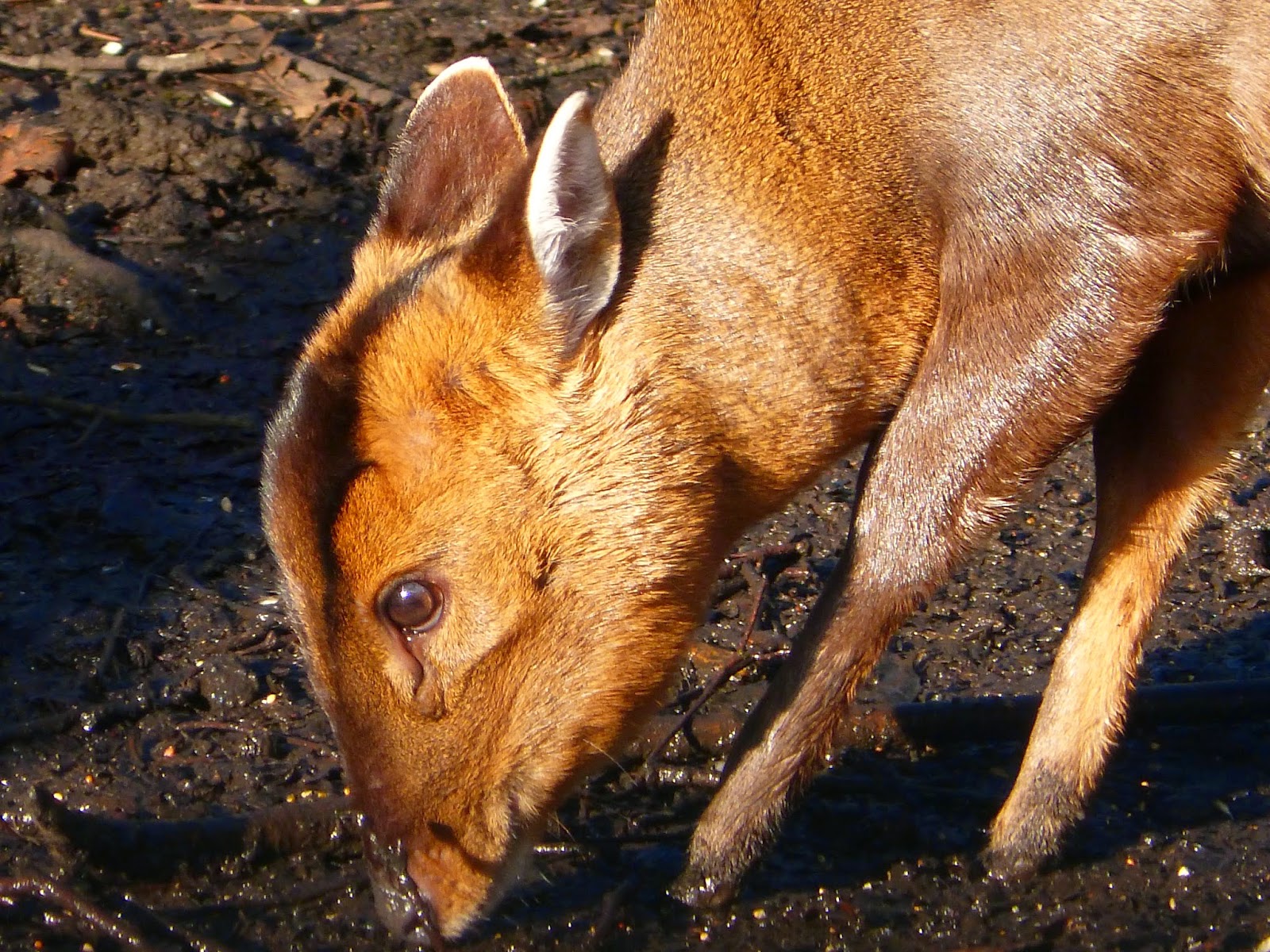
| Muntjac deer |
 |
| Coal tit |
Subscribe to:
Posts (Atom)