Well, it's certainly been a wild weekend. The photos I managed to take at Minsmere don't do justice to the phenomenal amount of wildlife we actually saw...
 We arrived at RSPB Minsmere in early afternoon, so headed straight to the Discovery Centre for the picnic area. It was far quieter than we imagined for a weekend during #Springwatch, and genuinely debated eating our lunch on the play area, in the mock-up sand martin bank... but as a group of teachers, we decided to be sensible and use the picnic table instead. As we sat next to the swaying oak trees, we were joined by a single robin and a bushy tailed squirrel, and we sweltered in the warm humidity of the surrounding air. A female black cap made her presence known at the top of a small tree.
Walking through the cool woodland, we were surprised to find great tits nesting in a number of the brightly coloured bird boxes directly next to the visitor trails. We could hear them calling to the parent birds for food as we passed, but did not linger to avoid disturbing them. My attention was also caught by the calls of a great spotted woodpecker. We looked up to be greeted by the face of a woodpecker chick poking out of its tree stump home. Soon, the adult visited to feed its young and the chick retreated back in, with only a shadow of its bill visible.
 |  |  |
We headed to bittern hide. It was packed and we had to stand, but that did not spoil the beautiful landscape sprawling in front of us. A huge marsh harrier made a close pass to the hide, a beautiful and majestic bird, it's dark 'fingers' clearly visible at the end of its wings. Bursts of the babble of Cetti's warbler surrounded us, but there seemed little to see in the afternoon heat. A water rail made a run for it across a small open inlet, its long legs carrying it quickly across. A hobby graced the sky, flying directly towards the hide, before scything off to one side and disappearing over the trees. Then, a bird which I always try and fail to see at Minsmere appeared. A bittern flew out from almost directly underneath the hide and landed in the reeds a few metres away. The sun caught its wings beautifully, each feather showing in exquisite detail. Almost as suddenly as it appeared, it vanished again, leaving me wondering if we'd all just imagined this other-worldly encounter. However, it began booming and eventually showed movement, reeds flattening in its wake and an almost imperceptible bill and head, with those dark bars near the eyes, moved up and remained vertical for some time, before it slunk further into the reeds and disappeared.
 On our way to the next hide, we noticed cameras set up on a number of stickleback nests. Maybe this will be another 'Spineless Si' on Springwatch?
Looking over the side of the boardwalk, which was flanked with early marsh orchids, we noticed a small, long-tailed, auburn coloured bird flitting back and forth - there were bearded tits!!! None were close or still enough to photograph, but watching them through binoculars was treat enough for me today, with their blue heads and ridiculous moustaches, they were impressively agile flyers and disappearing artists. As soon as they landed, they were gone from sight.
In the hide, we watched a pair of reed warblers either squabbling or courting, it was hard to tell, right next to the windows. An otter made an appearance, bobbing along at the very back of the water body. Marsh harriers graced the sky here too, gliding across the fenland.
Walking back, we tried the adder trail, but rather than adders, it was full of rabbits and dragonflies (mainly four-spotted chasers), as well as a young scurry of squirrels. I have to love the common British wildlife as much as the rare!
 |
 |

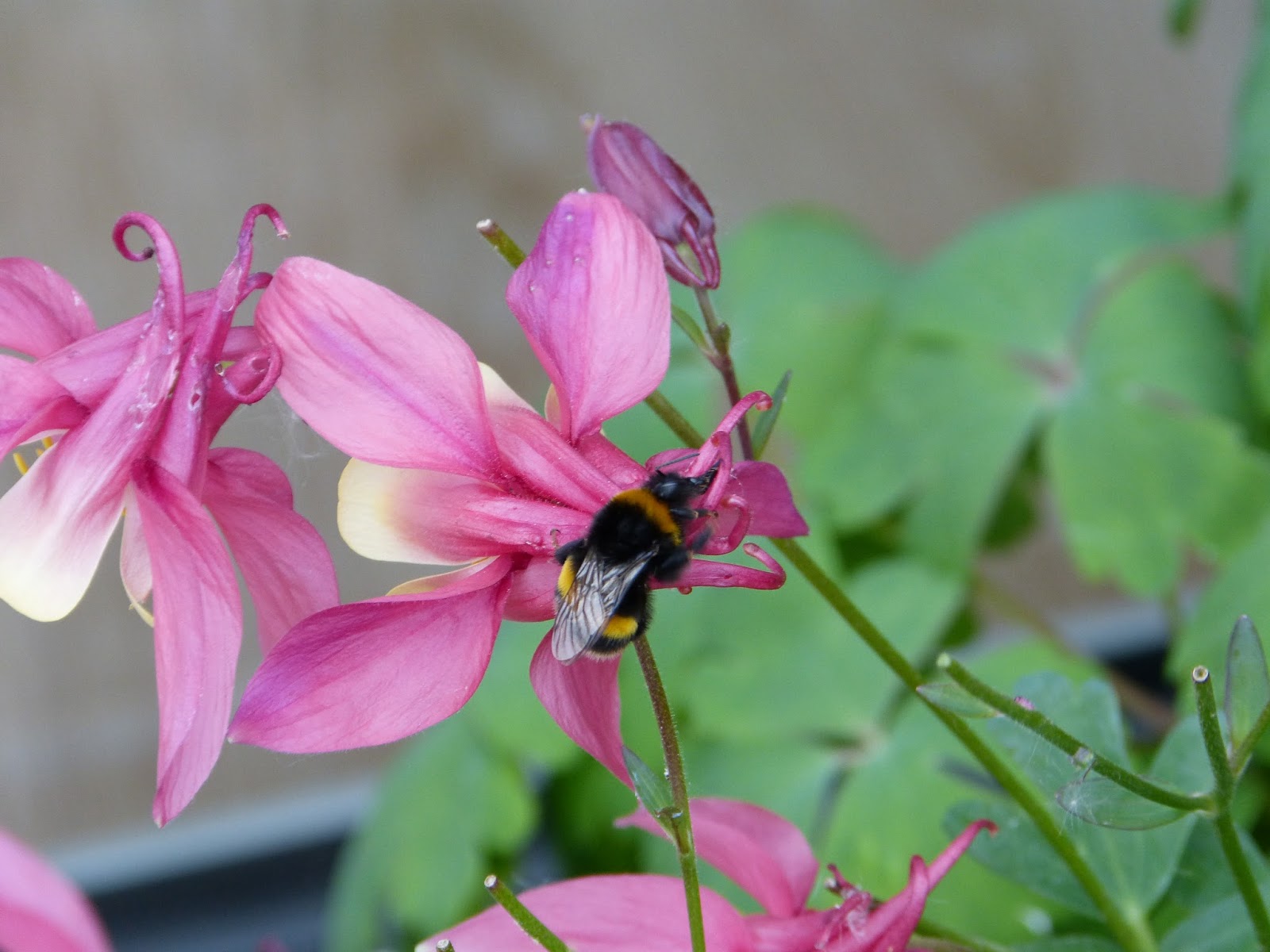
Wildlife at the allotment is my focus of today. I have to admit that I haven't visited in a while, but I was pleased by the wildlife we saw in the brief spell we had whilst the sun was still shining. Digging over a patch of soil, I came across ladybird larvae, which I tried my best to save. Poppies which had self seeded over some of ours and the surrounding patches were humming with bees and the larkspur I diligently tried to raise indoors last year were thriving in the great outdoors. A robin joined us to hoover up grubs we were unearthing and a blackbird was chinking from nearby trees. Swifts screamed overhead and gradually got lower and lower with the changing air pressure, until the heavens opened and we got a proper basking (drenched in a heavy rain shower).