Sunday, 17 April 2016

Some familiar places and a new local patch!

It's been about six weeks since my last blog update - it's been a bit of a busy time! We moved house during the Easter holiday and are settling in. That means we've said goodbye to our old local patch near the River Wensum and have a new local patch not far from the River Yare. In this update, I'm hoping to sum up our time at our old patch, introduce our new patch and take a tour of a familiar places during the mean time.

The old patch

We've lived in a flat in Norwich close to the River Wensum together for about 3 years. In that time, we've set up bird feeders in the communal gardens - attracting and sustaining quite large numbers of particular species (especially starlings and green finches). In the process we also accidentally created an ideal home for a family of wood mice in hole just beneath the feeding station. On walks around the patch, we've seen otters, woodpeckers, kingfishers and many woodland birds. Although most of the more uncommon species only showed themselves when I wasn't carrying my camera! We've seen a lot of wildlife in what we thought was an unlikely place in the city. I hope that our small population of birds will find ample food sources without us (I'm sure they will). We've also seen lots around our usual wildlife adventure areas, of which we've managed to visit a couple during the moving process...

Foxley Wood - 8th April

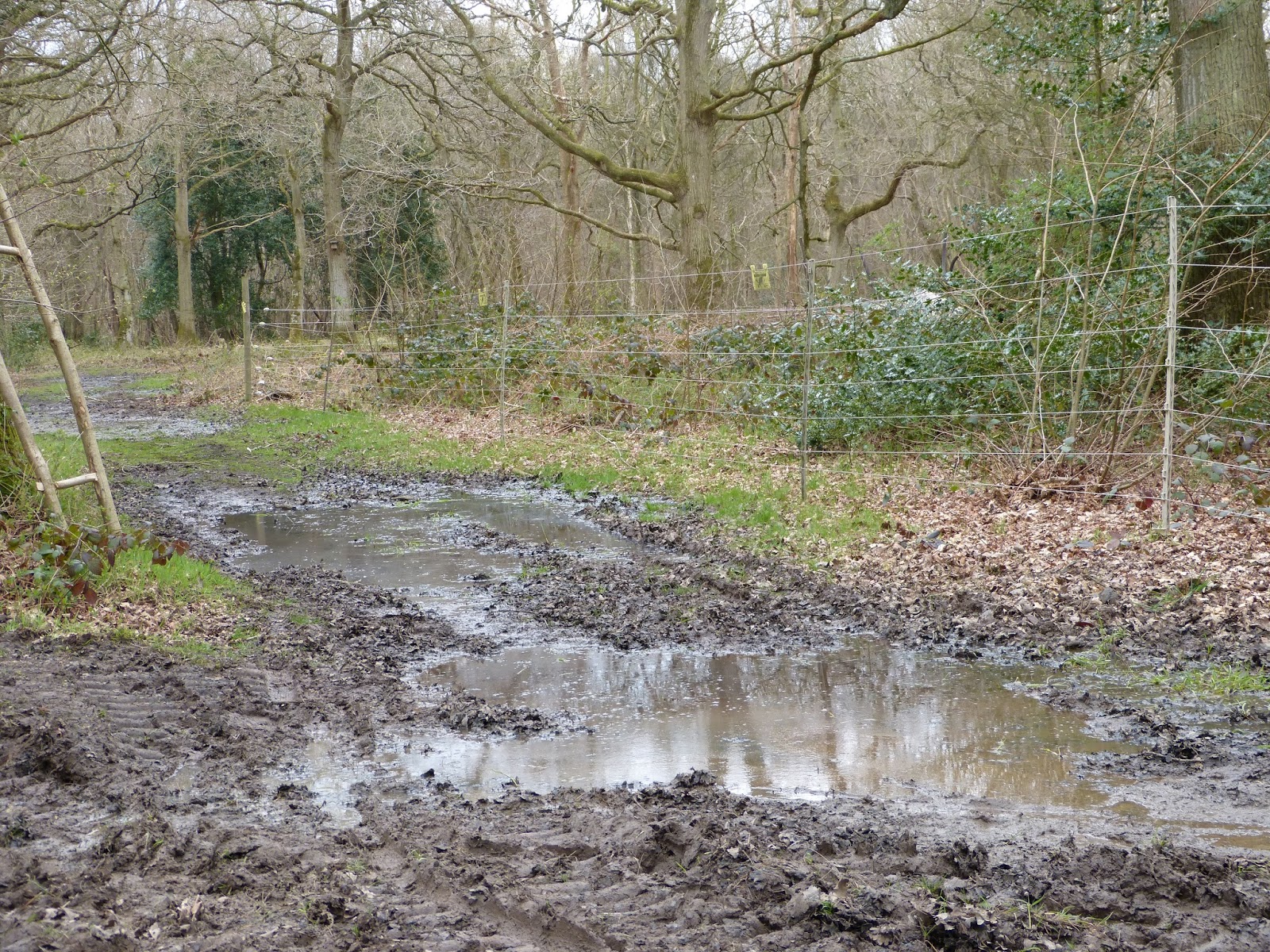
Just over a week after we moved to our new house and a few days before returning to work, we decided to escape the boxes, sorting and shopping and go on a hunt for bluebells at Foxley Wood. I had been hearing reports of early bluebells and didn't want to accidentally miss one of my favourite wildlife spectacles. It was a beautifully sunny day, but we hadn't considered quite how wet and muddy it would be after the thunderstorm the previous evening. It prevented us from reaching the bluebell hotspots, but we took comfort in that the patches of bluebells we did find were just coming into bloom. There should be a chance to go back before they are over. Pretty white blossoms adorned some of the trees and the sunshine had brought out a myriad of butterflies: brimstones, commas and peacocks basking and skimming over the unkempt grasses at the edges of the rides. A chiff chaff called in the background, heralding that spring had arrived with him. We stopped before the path became unpassable and listened: a buzzard calling in the background, tits and finches calling too each other. A sense of calm in the chaos of the last few days. 


Our new patch

We're not actually that far away from our old patch, but we are now in a house in the suburbs of Norwich. That means I now have a small garden which is pretty much just lawn at the moment - I'm itching to get started on transforming it into a wildlife haven. The very first thing we did when we arrived (and I really do mean the first thing!) was to put up our bird feeding station and fill it full of the normal delicacies. Not expecting anything for at least a few days, I was pleased that it had been found by a magpie, a pair of collared doves and a pair of woodpigeon within the first day. Not my intended audience, but still a good start. There is a park and a small woodland opposite the front of our house and when hanging washing out (is it sad that I am excited that I can do this?!) I can hear blue, great and coal tits, chaffinches, green finches and gold finches, even a chiff chaff and a green woodpecker, so I knew we'd get some smaller birds eventually. We've now been here for just over two weeks and we have regularly visiting birds which are slowly growing in numbers. The first were a pair of blue tits, then a pair of great tits, now we also have a pair of chaffinches and a robin. Hopefully the other birds I can hear will find their way across too. On walking around our local patch, we've discovered, to our delight that we can walk through the small woodland, which is absolutely filled with bird song. There is a mixture of mature and young trees and daffodils and English bluebells have been planted beneath them. The park leads to a path. On the corner, amongst a few trees, I have found a pair of nuthatches in the same place three times. I've decided I am going to call this 'nuthatch corner'. They are clearly used to people passing because on the third occasion, I took my camera and managed to get some decent shots of one of them.

 I'm hoping to keep updates of the new birds and other creatures that visit our garden and local patch and a record of my wildlife garden improvements - suggestions for plants are most welcome!

Sunday, 28 February 2016

Strumpshaw stomps

We've had a couple of nice walks around Strumpshaw Fen recently, despite the muddiness and diversions! Without wellingtons, some of the reserve has been inaccessible to us of late, leaving us to wander the woodlands, which we don't always visit, and spending more time at Fen hide.

Our trip during half term did not prove fruitful in terms of waders, but it was wonderful to watch a pair of marsh harriers above the reeds at Fen hide. The woodland was very quiet for birdsong, but we were lucky to spot a tree creeper at the very end of the woodland walk. I have not seen one of these well camouflaged birds in a long time, but this individual was very obliging, returning to the very base of the tree trunk before circling its way round and up, allowing for some good observations. I noticed only afterwards that I could see its tongue in the photographs I took.

The snowdrops were out in force, lighting up the woodland walkways like fairy lights. Amongst the dead wood and decaying leaves were also the vivid hues of the scarlet elf cap fungus.


Our second visit today was much later in the afternoon, in the hope of seeing more crepuscular animals. On arrival, we were told that a penduline tit had been showing well from Fen hide and if we stayed until dusk, we might be lucky enough to spot it. It was not to be, however.

The woodland walk today was much livelier than it was on our last visit, with bird song louder and more varied. A pair of coal tits hovered and hid among the upper branches of the coniferous trees, not far from where our tree creeper had been. The most surprising observation in the woodland was a seven spot ladybird perched on a trio of hazel(?) catkins. It must have ventured out during a milder spell, now trying to find a crevice to squeeze into in the chilly afternoon.

We walked back through the woodland and made our way to Fen hide. Here, we saw two marsh harriers gliding above the reed bed, then disappearing among the swaying golden fronds. At the same time, appearing from near the waterline, were Chinese water deer. They would appear and disappear silently into the reeds, with no betrayal of their loud vocalisations that we could hear only later when leaving the hide.


Tuesday, 16 February 2016

Valentines Day at Sculthorpe

It was a brisk morning on Sunday, but that didn't stop us getting some wildlife into our 'Valentine's Day'! It also didn't stop the wildlife from putting on a show, we had some great views of a variety of bird species. Unfortunately, my photos do not do our views justice!

The viewing panel looking over a variety of feeders near the information boards at the very start of the boardwalk is usually where we see the biggest variety of bird species, but there were fewer here today. There were a few blue, coal and great tits flitting to and fro, but that was the limit for this morning. Things got much more exciting after we arrived at the woodland hide.

Walking along the boardwalk we were somewhat sheltered from the cool wind, which may have explained the absence of a number of birds at our previous stop. Walking the woodland loop, we spotted a male siskin dining on nyger seeds strung high up in the trees. On reaching the woodland hide we were greeted with views of numerous chaffinches, greenfinches and tits. After around five minutes, everything in sight scattered. We knew there had to be something predatory around. It was at this point that a few other visitors entered the hide and we had to explain why we were looking so intently at a landscape devoid of birds. Suddenly a dark brown, arrow-like shape scythed into view and through the trees, causing all of the hidden smaller birds to flee to new shelter. A sparrowhawk. It deftly avoided branches and flew through gaps which appeared far too small. After several attempts, the hunter gave up and carried on across the surrounding fields. As soon as the finches and tits decided the coast was clear, they returned in force, calling loudly. The great tits were the first to venture forth into the open and onto the feeders, soon followed by the blue and long tailed tits. The long tailed tits were a pair chatting to each other, in calls I wouldn't normally associate with this species, in the short shrubs directly in front of the hide. It didn't take long for a pair of bullfinches to join in either. They began to defend their feeding perches from other birds. As the other birds began to disappear, a brambling timidly entered the scene and kept well hidden amongst the small leaves and branches.

The walk along the boardwalk was quiet in terms of what we could see, but birds could be heard around us. There was little to be seen at the Fen hide, but the new tower hide had some wonderful birds feeding outside the shutters looking over the woodland. A new bird for us was a lesser redpoll that joined a charm of goldfinches on one of the long feeders. A subtly beautiful little bird. A marsh tit also joined the feast. However, this hide was busy, so once we'd had a good view, we left and marched quickly back to the car in an attempt to warm up!


Sunday, 14 February 2016

Pochard at Pensthorpe

Sunday 7th February 2016

It was a cold and windy day, cloudy with some sunny spells. We might have been frozen, but the waterfowl didn't seem to mind too much. I have a soft spot for tufted ducks, I'm not sure if it is due to their attempt at a rebellious hair style, their lemon yellow eyes or their daintily sculpted beak, but I do like these little diving ducks. I'm always equally fascinated by the elaborate feet of the coot, the one pictured below tolerated my close proximity and just kept munching on grass as I photographed it. Somewhat less easy to capture was a decent shot of the small raft of pochard on 'Old Squaw Lake', all were hiding their heads under wings and hiding entirely under trees. A couple eventually ventured further onto the open water, showing their bright berry red eyes.

Tufted duck
Coot
Pochard
As much as I admire these three bird species, they were not a surprise to find here. One very surprising find was a smew (red head) on the same lake. Now, Pensthorpe do have smew in their collection, but their captive birds are found on the Mill Pond not far from the conservation shop. It is a possibility that this individual had snuck through the fence, but there was no way of seeing whether it was ringed as its legs were below the waterline... But, I can still hope that this was a wild individual rather than an escapee.

Our walk today was brisk, trying to keep warm in the chilly conditions. We made it to the woodland hide where there were woodland birds in abundance. I have written before about my hunt for a nuthatch as this is one of the few places where I get to see them well. Luckily, one did show itself to feed and perch on the trunks of surrounding trees. They can be domineering over the bird feeders, but they are beautiful birds with their dusky blue backs, apricot blushed breasts and black bandana around their eyes, making them look like bank robbers of the bird world.


All of the hides were deserted, maybe it was that we were relatively early visitors, or whether the cold conditions had put others off, it was nice to have them to ourselves. After an equally brisk walk through the woodland and around the the wildflower meadow, we made our way to the wader scrape hides. These hides are often all-or-nothing when we visit, but today was pretty spectacular. When we arrived, there were a good number of lapwing (for which I've just discovered the collective noun is desert or deceit!) alongside teal, wigeon, shelduck and others. Suddenly the flock lifted and scattered and to our amazement, a peregrine falcon sped into view and vanished almost as quickly as it appeared. Whether it was just passing and wasn't hungry, or was just scattering the birds for its own amusement before passing through, is anyone's guess.


Saturday, 6 February 2016

A Week of Big Bird Watches

Three different bird watch events in four days: Big Schools' Bird Watch, Big Garden Bird Watch and Big Castle Bird Watch.

RSPB Big School's Bird Watch - 28th January

This is the fourth consecutive year that I have run the Big Schools' Bird Watch at my school. Our bird watch this year, in numbers, looked like this: 2 teachers, 70 pupils and 99 birds. Our results looked like this:

It may not have been a record year for the number of birds seen, but it was certainly a record for the number of pupils who wanted to get involved! It was great to have so many individuals, most of which did have a genuine interest in the bird watch and nature. However, a few conversations I had with pupils and staff struck a cord with me, and with an article in the February issue of BBC Wildlife Magazine. Why are we so blasé about 'common' species? Or even about locally common species. With my school being so close to farmland, we do get a lot of house sparrows in the local area. Very few of the individuals I spoke to had any idea that sparrow populations have declined so spectacularly on a national level. Hopefully, through the assemblies and conversations I have taken part in, this message may have got through to some. I do think that the Big Schools' Bird Watch was a positive experience for all the pupils that took part, even if some of them did get a little chilly. Hopefully, they all learnt something too.

RSPB Big Garden Bird Watch - 30th January


We carried out our Big Garden Bird Watch on Saturday lunch time, it was a bright and cool day in Norwich and it was nice to watch the birds visiting from the comfort of our flat. It was a busy hour, especially for the starlings! We had RSPB 'bird cakes', 'super suet balls' and mixed seed on offer. This seems to be the best combination of food for attracting a relatively wide range of species to our patch. Since spring last year we have had a healthy number of green finches visiting, I was particularly pleased about this, especially due to their decline in numbers due to the arrival of trichomoniasis in recent years. I am also excited to have finally attracted a regular gang of long tailed tits, one of my favourite British birds, although they were not representing their usual number in this set of data. Our flock of starlings are regulars and, although they take over the entire feeding station when they arrive (intimidating the local wood pigeons), I love watching their squabbling and occasionally comedic antics. They are such beautiful and overlooked birds too, most people I have spoken to recently describe them as 'greedy' and aren't quite as enthusiastic about having them in their area.


The Big Castle Bird Watch - 31st January

I spent my afternoon on Sunday volunteering at the Big Castle Bird Watch; an event held at the Norwich Castle Museum and run by RSPB Strumpshaw Fen. There were lots of activities for the public to get involved with, all of them aimed at raising awareness of the natural world, the dangers wildlife faces, why people should take part in the Big Garden Bird Watch and why they should visit Strumpshaw Fen. My small part of the event was mostly spent encouraging younger children to dress up as a dragonfly and attempt to catch beanbags made into flies in a net. The idea was for them to dart around like a dragonfly would when hunting and give them an appreciation of how agile and maneuverable these amazing insects are. I'm not sure they all took this message away from the game, but they certainly had fun with it!

Friday, 29 January 2016

Snow bunting and Snipe at Cley


On Sunday, we visited NWT Cley Marshes. Last time I visited here, we saw very little and got pelted with hail stones before we turned tail and ran for home. Thankfully, this visit was more successful! The weather was mild, if cloudy and a little windy along the coast line.

We began our visit in one of the hides not far from the visitor centre. Looking out over the beautiful flat landscape dotted with birds, we could just about pick out a number of common snipe keeping well hidden in the long grasses on the islands breaking up the marshes. Above them and the waders, wigeon and other ducks, two marsh harriers wheeled above, hinting at a sky dance. As they came closer, it was clear the male was carrying something in his talons, which, in one spectacularly smooth maneuver, he passed to the female. A harrier food pass! What a wonderful way to begin our visit.

As we began the long walk out to the see front, the grasses were in full voice in the wind, the air full of their fizzma. I am convinced that I saw a bearded tit dive from one stand of grass to another, but in the wind it was definitely not going to make a reappearance for confirmation, so we moved on. Some other friendly visitors tipped us off about a flock of roughly 20 snow buntings on the shingle by the sea. Not quite knowing what we were looking for, eventually, we stumbled across them just as they took flight. A flock of white-pink-brown flashes of wings and underbellies and then they were gone - rising high and descending far along the shore.

As we continued our windy walk, the sky began to clear and something spooked a large flock of lapwings. Their stubby wings eye-catching in white and black against the bright sky, they floated across the clouds. Their outlines stark and rigid against the fluffy shapes high above. They were unsettled and would not land, allowing us to appreciate their prowess and agility.

Our last large group of birds of the day was a huge gaggle of brent geese, all softly chatting to each other in their monotonous but sweet calls.


Monday, 4 January 2016

Christmas and New Year Wildlife

Happy New Year to everyone! Here's a little of what we've managed to do and see in the generally miserable weather over the Christmas break.

We spent the first part of Christmas is Southsea at my in-laws. It was lovely to have some walks by the seafront during the festivities. No migrant birds to be seen this time, but some beautiful house sparrows and starlings around, alongside a talkative gaggle of brent geese. Among the geese were a few skittish pied wagtails.


On the morning of our departure, on a nearby church, perched a peregrine falcon tearing at its meal of pigeon, feathers being blown in the wind after each rip of the peregrines beak.

Just after new year, we visited some friends who live in Sheringham. Another walk along the seafront in a very different part of the country. We approached a rather tame cluster of turnstones. Among this hardy little group though lurked a couple of much shyer purple sandpiper. Not a bird I think I've seen in Norfolk before.


Turning our backs to the sea, we spotted a small murmuration of starlings over the town, which slowly grew in number as the light began to drain from the sky. Multiple flocks appeared which mingled with each other, then separated. We hunted out their chosen roosting spot, watching the flocks shape shift above streets and houses on our travels. It was wonderful to see so many groups of people just stopping and watching the birds' performance. Eventually, we tracked down their chosen spot to a large conifer tree in a back garden and watched some of them stream down from the sky, then jostle and chatter for position. By the time we left, our friends estimated that there were probably in the region of 1500 birds in total.


This has been the only starling murmuration I have seen so far this season, but I have been sure to record it on the starling survey. If you see any, be sure to submit your recordings too.